



What Our Customers Are Saying
Fan Speed Regulators
Fan Speed Controllers & Regulators
Explore our range of Fan Speed Regulators at iACS. Whether you are managing complex commercial HVAC environments or specialised industrial setups, implementing reliable fan speed controllers is essential for maintaining optimal indoor air quality and energy efficiency. Pairing a robust control system with a strict servicing schedule is highly recommended; you can learn more about this in our comprehensive guide on heat recovery unit HRU best maintenance practices.
If you need assistance selecting the right component for your specific application, please don't hesitate to Contact Us. Browse the full range at iACS.
Find the fan speed regulators for your humidification system
Explore on our IACS store all the one-phase to three-phase fan speed regulators.
Fan speed regulators are single-phase voltage controllers that modify the effective voltage output to the load using the principle of phase control, which is based on the phase of the PWM control signal (see Fig. 3, which refers to the case of a resistive load). The speed management of single-phase condenser fan motors based on the pressure or temperature detected on the heat exchanger is one example. Contact our Support team at IACS for technical advice.
Follow all the latest updates on our IACS blog.
-
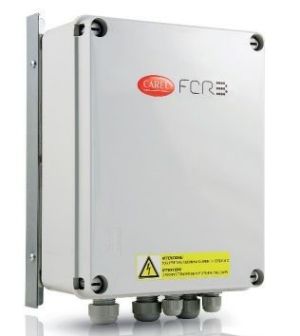
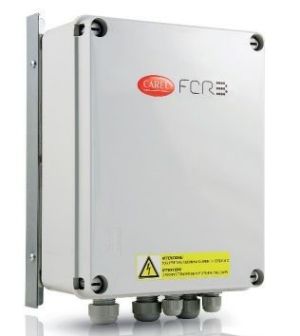
![]() FCR3124020 - Carel FCR3 three phase speed controller with Modbus RS485 serial connection, 400V, 12A, 65W
FCR3124020 - Carel FCR3 three phase speed controller with Modbus RS485 serial connection, 400V, 12A, 65WSKU: FCR3124020
£1,136.66 £947.22 -
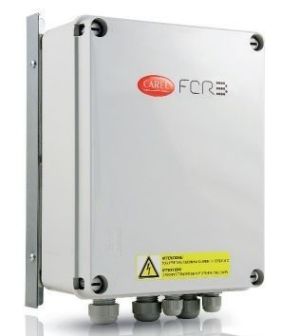
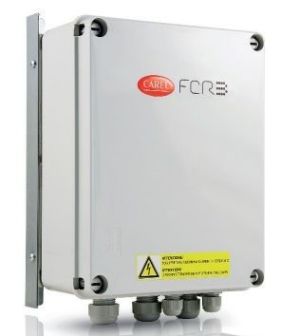
![]() FCR3204020 - Carel FCR3 three phase speed controller with Modbus RS485 serial connection, 400V, 20A, 128W
FCR3204020 - Carel FCR3 three phase speed controller with Modbus RS485 serial connection, 400V, 20A, 128WSKU: FCR3204020
£1,470.79 £1,225.66 -
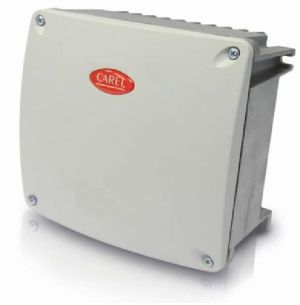
![]() FCPM082010 - Carel Stand Alone fan speed controller, single phase 8 A 230 Vac, IP54, Master/Slave version
FCPM082010 - Carel Stand Alone fan speed controller, single phase 8 A 230 Vac, IP54, Master/Slave versionSKU: FCPM082010
£357.35 £297.79 -
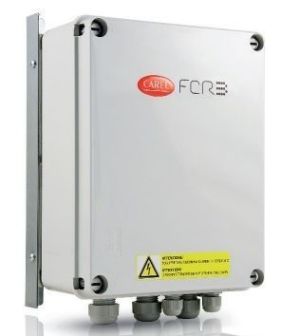
![]() FCR3404020 - Carel FCR3 three phase speed controller with Modbus RS485 serial connection, 400V, 40A | Carel Controllers | Carel Controls
FCR3404020 - Carel FCR3 three phase speed controller with Modbus RS485 serial connection, 400V, 40A | Carel Controllers | Carel ControlsSKU: FCR3404020
£2,072.10 £1,726.75 -
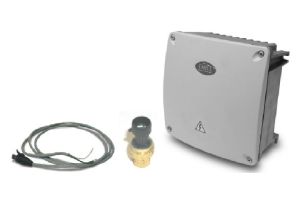
![]() FCPM00A01K - Carel Fan speed controller KIT, with 34.5 Bar pressure transducer and 2 meter packard connection cable
FCPM00A01K - Carel Fan speed controller KIT, with 34.5 Bar pressure transducer and 2 meter packard connection cableSKU: FCPM00A01K
£453.68 £378.07 -
![]() FCR3064020 - Carel FCR3 three phase speed controller with Modbus RS485 serial connection, 400V, 6A, 35W
FCR3064020 - Carel FCR3 three phase speed controller with Modbus RS485 serial connection, 400V, 6A, 35WSKU: FCR3064020
£936.67 £780.56 -
![]() FCR3094040 - Carel FCR3 three phase speed controller with Modbus RS485 serial connection, 400V, 9A
FCR3094040 - Carel FCR3 three phase speed controller with Modbus RS485 serial connection, 400V, 9ASKU: FCR3094040
£1,036.66 £863.88 -
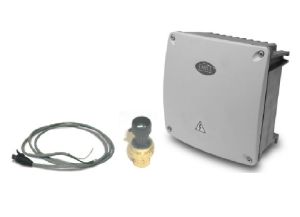
![]() FCPM00A02K - Carel Fan speed controller KIT, with 45 Bar pressure transducer and 2 meter Packard connection cable
FCPM00A02K - Carel Fan speed controller KIT, with 45 Bar pressure transducer and 2 meter Packard connection cableSKU: FCPM00A02K
£453.66 £378.05 -
![]() FCPM082A10 - Carel Fan speed controller - Carel SLAVE Board, single phase 8 A 230 Vac, IP54
FCPM082A10 - Carel Fan speed controller - Carel SLAVE Board, single phase 8 A 230 Vac, IP54SKU: FCPM082A10
£254.88 £212.40
Fan Speed Control in HVAC Systems: Regulators and Inverters
Controlling fan speed is fundamental to HVAC system performance. Whether the goal is reducing noise in a residential ventilation system, maintaining a constant supply air volume in a commercial AHU, or maximising energy savings in a large central plant, the right speed‑control technology makes all the difference. These strategies sit within the broader HVAC control framework outlined in The Complete Guide to HVAC Controls, where fan modulation plays a central role in efficiency and comfort.
iACS supplies both single‑phase fan speed regulators and three‑phase variable speed drives for the full range of HVAC fan applications, and if you’re comparing drive types or selecting the correct model for a project, our Variable Speed Drives Selection Guide walks through the key considerations.
Single Phase Fan Speed Regulator
Single-phase fan speed regulators (also called fan controllers or speed controllers) are used with single-phase AC induction motors — the type found in most residential and light commercial ventilation fans, extract fans, and fan coil units. They work by reducing the voltage supplied to the motor windings, which reduces motor speed and airflow.
Phase-cut regulators (the most common type) use a TRIAC to reduce the RMS voltage delivered to the motor, providing stepless speed adjustment. They are available in DIN-rail mount, panel-mount, and potentiometer versions.
-
1-phase regulators are suitable for single-phase motors only — typically 230V, up to around 10A.
-
Always check that the motor is compatible with speed regulation — most standard single-phase induction motors are compatible; some EC (electronically commutated) motors have their own built-in speed control and may be damaged by external regulators.
-
For fan coil units and ceiling fans in commercial applications, single‑phase regulators offer a low‑cost, simple speed‑control solution without the complexity of a full VSD. For available models suited to these applications, you can browse our range of 1‑phase fan speed regulators.
Three Phase Fan Speed Controller
For three‑phase fans in commercial AHUs, extract systems, and cooling towers, three‑phase variable speed drives (VSDs/inverters) provide the most energy‑efficient and controllable method of fan speed management. Unlike single‑phase regulators, three‑phase VSDs maintain full motor torque across the speed range and integrate easily with BMS platforms via BACnet or Modbus. For applications that don’t require a full inverter, you can browse our 3‑phase fan speed regulators to compare simpler voltage‑control options.
Where full functionality, energy optimisation, and BMS connectivity are required, HVAC‑optimised inverters such as ABB and Danfoss models offer the best performance. Our ABB and Danfoss HVAC drives category includes the most commonly specified units for supply, extract, and pressure‑controlled ventilation systems.
Which Technology Is Right for Your Application?
A single‑phase regulator is the right choice for simple residential or light‑commercial ventilation systems, FCUs, and extract fans — it’s low‑cost, easy to install, and doesn’t require any communication capability.
A three‑phase VSD, on the other hand, is the standard for commercial AHUs, central supply and extract fans, and cooling tower fans, offering full energy‑saving capability, BMS integration, and advanced fault protection. These decisions sit within the broader control strategies outlined in The Complete Guide to HVAC Controls.
Technical Questions
What's the difference between a cut-phase (triac) fan speed controller and a 0-10V controller?
This is one of the most searched questions. Cut-phase controllers work by chopping the AC voltage waveform using a triac, reducing the effective voltage delivered to the fan motor. They are cost-effective and widely used, but can generate some electromagnetic noise — this is worth bearing in mind for low-noise condenser and dry cooler applications, particularly with 12-pole motors. A 0-10V controller accepts an analogue signal from a BMS or HVAC controller to modulate fan speed — it produces a cleaner signal and integrates well with building automation systems. Most units in our Carel FCSM range combine 0-10V signal input with cut-phase output, giving you BMS compatibility at a practical price point.
What's the difference between PWM and 0-10V control input?
Both are ways of sending a speed demand signal to a controller, but they work differently. A 0-10V input is an analogue DC voltage signal — the most common format in HVAC BMS wiring. PWM (Pulse Width Modulation) uses a digital on/off pulse signal and is widely used in refrigeration controls and EC fan applications. Units such as the Carel MCHRTF04C0, MCHRTF08C0 and MCHRTF12C0 accept PWM input. Before selecting a controller, check what output signal your BMS or HVAC controller provides.
When should I use a single-phase vs a three-phase fan speed regulator?
Single-phase regulators (230V, 1Ph, 50Hz) are suitable for smaller fan motors — typically found in fan coil units, small condensers, and AHU applications. Our single-phase range covers loads up to 12A. Three-phase regulators (400V, 3Ph, 50Hz) are required for larger commercial and industrial fan motors. If you are unsure, check the motor nameplate — it will clearly state whether the motor is single or three phase. Our three-phase range includes the Carel FCR3 series with Modbus RS485 serial connection, suitable for BMS-integrated plant rooms requiring remote monitoring and control.
Can I use a fan speed regulator with an EC (electronically commutated) motor?
Not with a standard cut-phase controller. EC motors have their own internal drive electronics and require a 0-10V or PWM control signal input — not a modified AC supply voltage. Connecting a cut-phase controller directly to an EC motor can damage it. Always confirm the motor type before selecting a controller. If you need guidance on compatibility, contact our technical team, and we will be happy to advise.
What does "linear output" mean on a fan speed controller (e.g. FCSM1223L0)?
A linear output controller provides a directly proportional relationship between the incoming control signal and the fan speed output. For example, a 5V input on a 0-10V controller would produce 50% speed. This is preferred in applications requiring smooth, precise speed variation — such as pressure-controlled ventilation or temperature-regulated condenser duty. You can see this in products like the FCSM1223L0 and FCSM0823L0 from our range.
What is the IP rating and why does it matter for fan speed regulators?
IP (Ingress Protection) rating indicates the level of protection against dust and moisture. IP54 means the unit is protected against limited dust ingress and water splashing from any direction — suitable for plant rooms, internal condensing unit panels, and sheltered outdoor enclosures. IP55 provides additional protection against low-pressure water jets and is preferable for more exposed installations. For most UK commercial HVAC and refrigeration plant room applications, IP54 as a minimum is recommended. Filter our range [by IP rating here] to find suitable units.
Can a fan speed regulator be used with multiple fans in parallel?
Yes, but the total current draw of all connected fans must not exceed the controller's rated amperage (e.g. 4A, 8A, or 12A). The fans should ideally be identical models. Some Carel units like the FCPM range support Master/Slave configurations for multi-fan setups. The Carel FCPM082010 supports a Master/Slave configuration, allowing one master unit to synchronise and control additional slave boards — ideal for banks of condenser fans that need to operate together from a single pressure or temperature input. The matching slave board FCPM082A10 is also available separately.
What is a Master/Slave fan speed controller setup?
A Master/Slave configuration allows one master controller to drive and synchronise multiple slave units, all responding to the same input signal. This is commonly used on condensing units or dry coolers with several fans that need to run at matched speeds. The Carel FCPM082010 is the master unit in this system, and the FCPM082A10 is the corresponding slave board. Both are single phase, 8A, 230Vac, rated to IP54.
Does the Carel FCR3 three-phase controller support BMS integration?
Yes. The FCR3 range includes Modbus RS485 serial communication as standard, making it directly compatible with most building management systems. It is available in several current ratings — 6A, 9A, 12A, 20A and 40A — to suit different motor sizes. This makes it well suited to larger plant rooms where remote monitoring, fault reporting, and centralised control are required.
General Questions
How do I know which fan speed regulator to order?
The three key things you need to know before ordering are: the motor's power supply (single phase 230V or three phase 400V), the maximum current draw in amps (from the motor nameplate), and how the speed will be controlled (manually, by a 0-10V BMS signal, or by pressure/temperature). Once you have those three details, our range filters by phase and current rating to narrow it down quickly. If you are still unsure, contact our team with the motor nameplate details and we will recommend the correct unit.
What information do I need from my fan motor before buying?
Check the motor nameplate for: voltage and phase (e.g. 230V 1Ph or 400V 3Ph), full load current in amps, and frequency (50Hz for UK). These determine which controller is compatible. It is also worth noting whether the motor is a standard AC induction motor or an EC (electronically commutated) motor, as these require different control methods.
What is the difference between a fan speed regulator and a variable speed drive (inverter)?
A fan speed regulator uses phase control or voltage reduction to slow a motor down — it is compact, simple to install, and cost-effective for most HVAC and refrigeration fan applications. A variable speed drive (inverter) converts the AC supply to DC and back again at a variable frequency, offering more precise control and better performance at very low speeds, but at a higher cost and greater complexity. For most condenser fan and AHU fan applications, a speed regulator is the practical and economical choice. We also stock inverters if your application requires full variable frequency control.
Can I fit a fan speed regulator myself, or do I need an engineer?
Fan speed regulators involve mains voltage wiring and must be installed by a qualified electrician or HVAC engineer. Incorrect wiring can damage the controller, the motor, or create a safety hazard. If you need help with specification or commissioning advice, contact our technical team.
Are these fan speed regulators compatible with Carel controllers?
Yes — many of the units we stock are manufactured by Carel and are designed to work seamlessly within Carel control systems. The FCSM and MCHRTF ranges in particular are commonly paired with Carel HVAC and refrigeration controllers. If you are building or maintaining a Carel-based system, browse our full Carel range, including controllers, sensors and accessories.
What brands of fan speed regulators do you stock?
We stock fan speed regulators from Carel, one of the leading manufacturers of HVAC and refrigeration controls, as well as the Axio range for cost-effective single-phase applications. All products are supplied with full manufacturer documentation. Browse the full range here.
Do you offer next day delivery on fan speed regulators?
Yes — selected products in our fan speed regulator range are available on next day premium delivery. Look for the next day delivery label on individual product pages. Orders must be placed before the cut-off time. For urgent requirements, contact us and we will do our best to help.
Can I get a quote for multiple units?
Yes — use the trade account page form on this page for bulk or trade enquiries. If you wish to have a trade account with us you will automatically see your trade pricing at checkout on future purchases. Apply for a trade account here if you are not already registered.
What is your returns policy on fan speed regulators?
Please refer to our returns policy page for full details. If a product arrives damaged or is not as described, contact us as soon as possible and we will resolve it promptly.
Still not sure which fan speed regulator is right for your application?
Our technical team specialises in HVAC and refrigeration controls and can help you select the correct unit based on your motor type, current rating, control signal, and installation environment. Contact us here or call us on +44 (0)20 81 333 679.