
What Our Customers Are Saying
Motorised Zone Valve Not Opening or Closing? How to Fix It
14
Aug
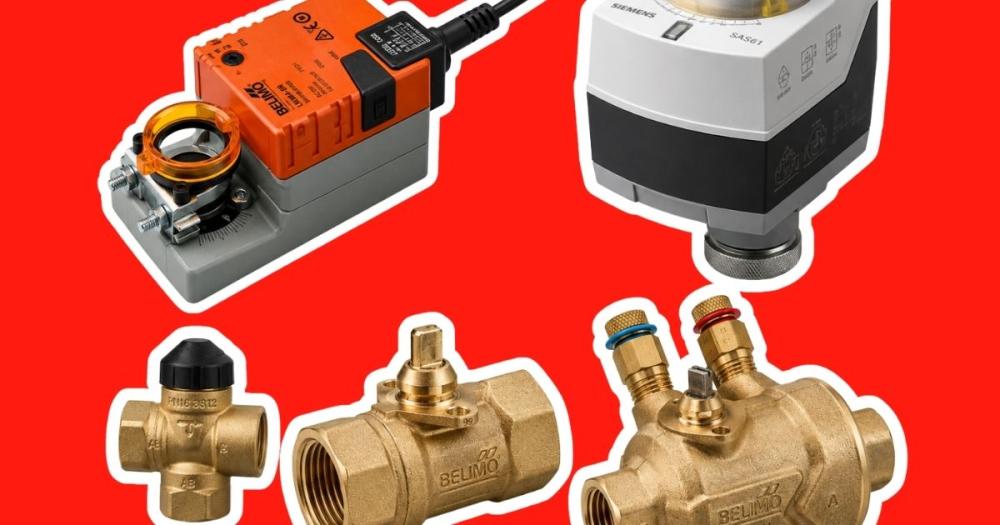
If a motorised zone valve will not open or close, the fault is almost always either the actuator or the valve body itself, and a simple manual override test will usually tell you which. Working through voltage checks and the fault table below resolves the majority of zone valve faults without an unnecessary system drain down.
How a Motorised Zone Valve Works
An actuator sits on top of the valve body and drives it open or closed in response to a control signal, as covered in our fan coil unit guide. Spring return actuators return the valve to a default, fail safe position if power is lost, while non spring return actuators simply stay in their last position.
Determining the Source of the Problem: Is It the Valve or Actuator?
The vast majority of actuators have a manual control lever or button where you can test to see if the valve can physically be operated manually and if the valve body moves freely. Checking the voltage at the actuator's terminals compared to the manufacturer's specifications will determine if the actuator has the proper control signal to operate. When the actuator buzzes but does not move the valve, there is a good chance that the valve body is seized up. No power at all to the actuator points back to the controls or BMS rather than the valve itself.
Common Faults and How to Fix Them
A valve stuck open is most often caused by a failed spring return actuator and is resolved by replacing the actuator. A valve stuck closed usually means either no power signal is reaching the actuator or the valve body has seized, requiring either a control check or a valve replacement. Leakage around the valve seat suggests wear of the valve seat and requires the valve body to be replaced. An actuator that produces humming sound without moving suggests seizure of the spindle, which can be remedied by freeing the valve or replacing it. Permanently engaged heating suggests that the valve is either stuck in an open position or not being signaled to close.
How to Replace a Zone Valve Actuator
Isolate the power supply to the actuator before you begin your work. Take out the malfunctioning actuator from the valve body without damaging the valve stem below. Install the new actuator by following the manufacturer’s instructions on torque and positioning, and reconnect the power source to check its movement.
Choosing a Replacement Valve or Actuator
Match the replacement actuator to the existing valve's spindle type, torque requirement and control signal, rather than assuming any actuator from the same brand will fit. iACS stocks replacement actuators and valve bodies across the Belimo, Siemens and Danfoss ranges.
Featured Replacement Actuators
Belimo LM24A-SR, Siemens SAS61.03, and Danfoss AME 435 actuators are among the most requested replacements for stuck zone valves, covering the majority of spring return and non spring return applications across UK heating and cooling installations. The Belimo LM24A-SR suits 24V spring return applications where fail safe closing on power loss is required. The Siemens SAS61.03 is a common choice for 3 point control setups on commercial zone valve installations. The Danfoss AME 435 fits Danfoss valve bodies needing a running time of 150 seconds with fail safe spring return. Confirm spindle type and control signal against the existing actuator before ordering, since these three ranges are not cross compatible.
Questions
How can you tell if your zone valve actuator is faulty?
A manual test override whereby the valve moves freely when you turn it by hand, together with a test for voltage at the actuator terminals, will usually determine if the problem is with the actuator or valve.
Can you change the zone valve actuator without draining the system?
In most cases yes, since the actuator sits on top of the valve body and can be removed and replaced without disturbing the water side of the valve, provided the valve itself is not being replaced.
What causes a zone valve to stick?
The most common causes are debris or scale build up inside the valve body, or a spindle that has seized from prolonged inactivity, particularly on valves that rarely operate through their full range.
Comment(s)
Recent Posts
-
Steam Humidifier Explained: How HygroMatik Humidification Systems Work
 October 16, 2026
 -
Carel Controller Fault Codes Explained: A Troubleshooting Guide
 October 15, 2026
 -
Damper Actuator Not Working? How to Diagnose and Fix Common Faults
 October 2, 2026
 -
VAV Box Explained: How Variable Air Volume Systems Control Airflow
 October 1, 2026
 -
Replacing a CAREL pLDPRO Display: pGDn Options, Fit Checks and Affected Part Numbers
 September 23, 2026