
What Our Customers Are Saying
How to Choose an HVAC Actuator: Torque, Voltage and Signal Type Explained
3
Nov
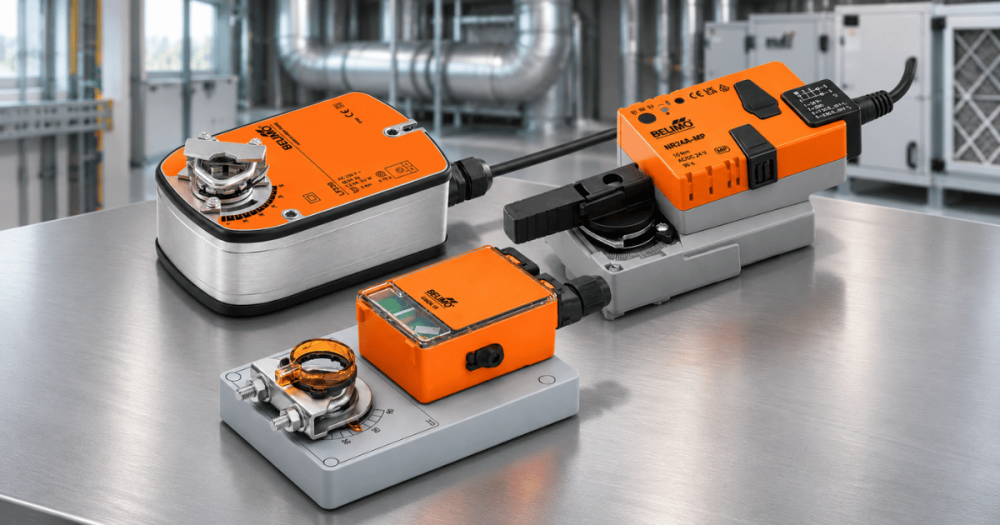
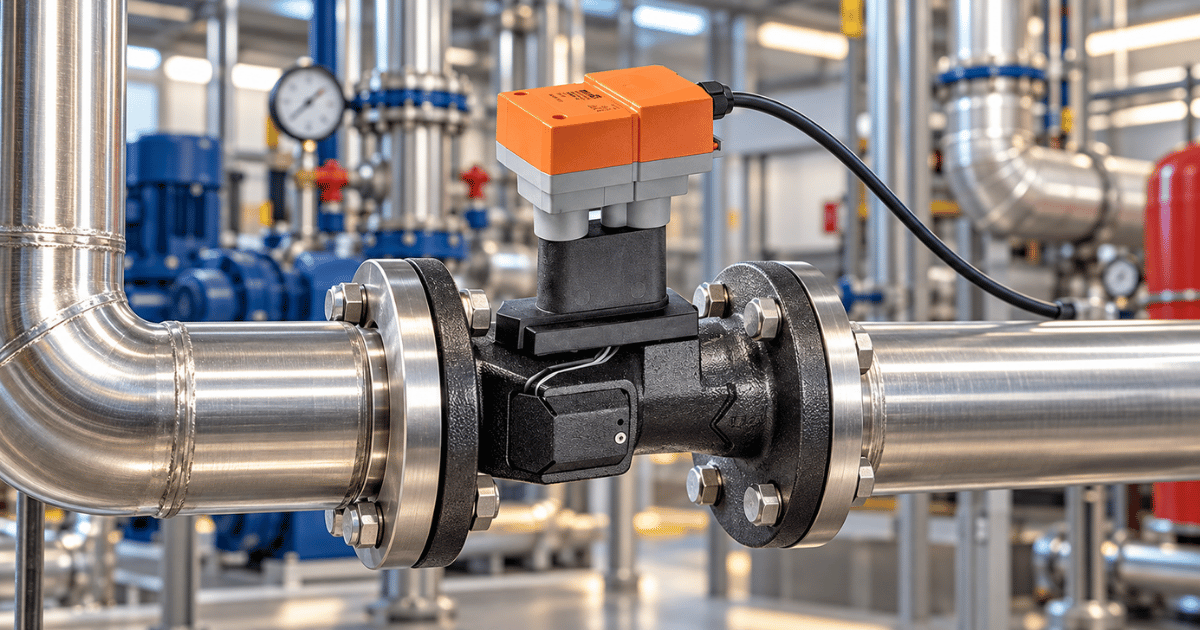
The choice of an appropriate HVAC actuator is dependent on three factors, which include torque rating, the voltage, and the control signal types. The error in any of these three factors will ensure malfunctioning or failure of the actuator even if the choice was seemingly good.
Matching Torque to the Valve or Damper
Every valve or damper has a manufacturer stated torque requirement, the force needed to move it through its full range reliably. Undersizing an actuator against this figure causes it to strain constantly, leading to premature motor failure, while oversizing wastes cost without any practical control benefit. Always check the specific torque figure for the valve or damper in question rather than assuming a similar looking device from a previous project will be adequate.
Voltage Options
24 volt actuators are the standard choice on most modern BMS installations, offering simpler, safer wiring and straightforward integration with low voltage control systems. 230 volt actuators are still specified in some applications, often where an existing installation already runs mains voltage control wiring and a like for like replacement is more practical than rewiring.
Control Signal Types
On and off control simply drives the actuator fully open or fully closed, adequate for less critical zoning applications. Floating point control uses two signals, open and close, allowing the actuator to be driven to intermediate positions through a series of short pulses, a step up in precision from simple on and off. Modulating control, typically using a 0 to 10 volt or 2 to 10 volt signal, holds the actuator at any position continuously, giving the finest level of control and standard on applications where precise temperature or flow control matters.
Running Time and Speed
A faster running actuator is not automatically the better choice. On modulating applications in particular, a slower, more precise running speed often gives smoother control than a fast actuator that overshoots its target position and has to correct back repeatedly.
Spring Return Considerations
Wherever a fail safe position matters, covered fully in our spring return actuator guide, the spring return decision needs to be made alongside the torque, voltage and signal type choice, since it affects both cost and physical size of the actuator required.
A Simple Selection Checklist
Confirm the torque requirement of the valve or damper. Confirm the voltage already available or planned for the installation. Decide whether on and off, floating point or modulating control is needed. Decide whether a spring return fail safe position is required. Ensure the running speed is appropriate for the use, especially where modulation control is needed.
FAQs
What happens if the actuator is too small for its valve?
The actuator will fight a load that exceeds its torque rating, causing early motor burnout and imprecise valve or damper positioning.
What is the difference between floating point and modulating control?
Floating point control uses two signals, open and close, driving the actuator through short pulses to intermediate positions, while modulating control uses a continuous variable signal to hold any position directly.
Can the same actuator be used on both valves and dampers?
Some actuators are designed to work on both, provided the torque, voltage and control signal match, though many are specifically designed and sized for one application or the other.
Featured Belimo Actuators
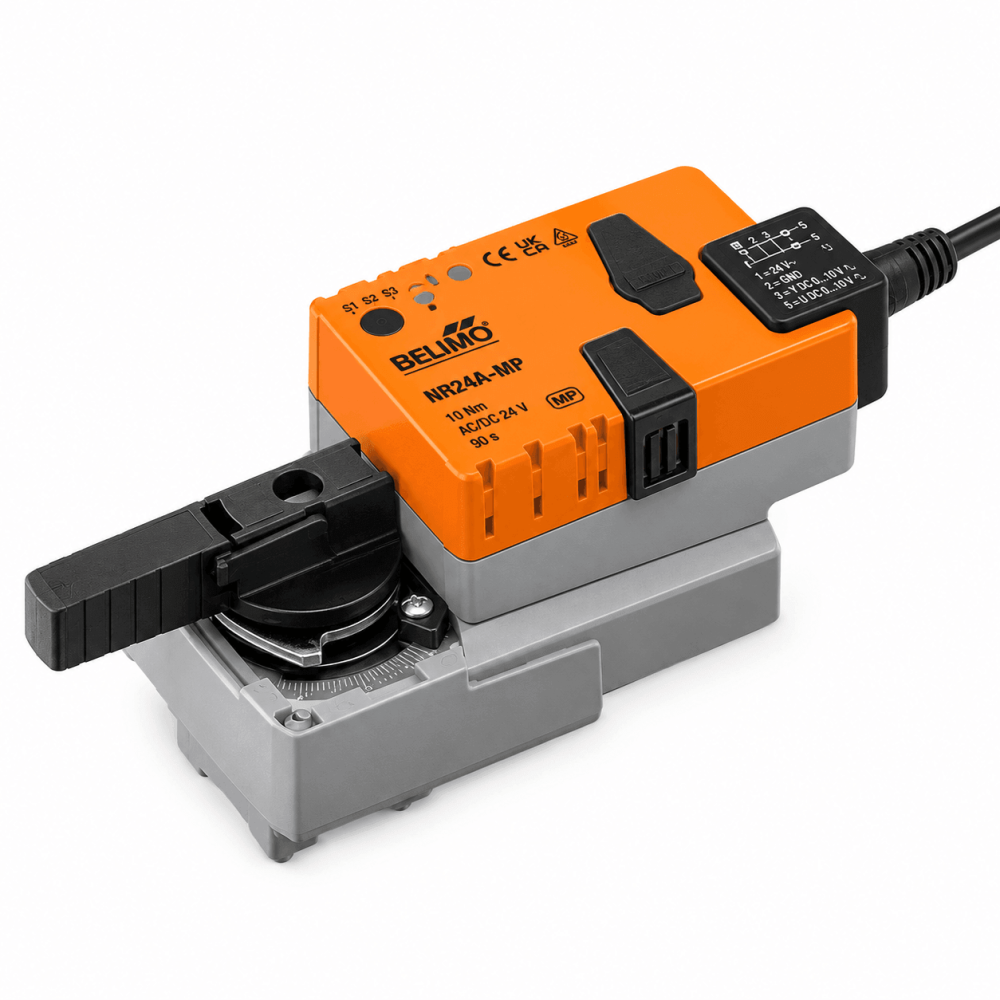
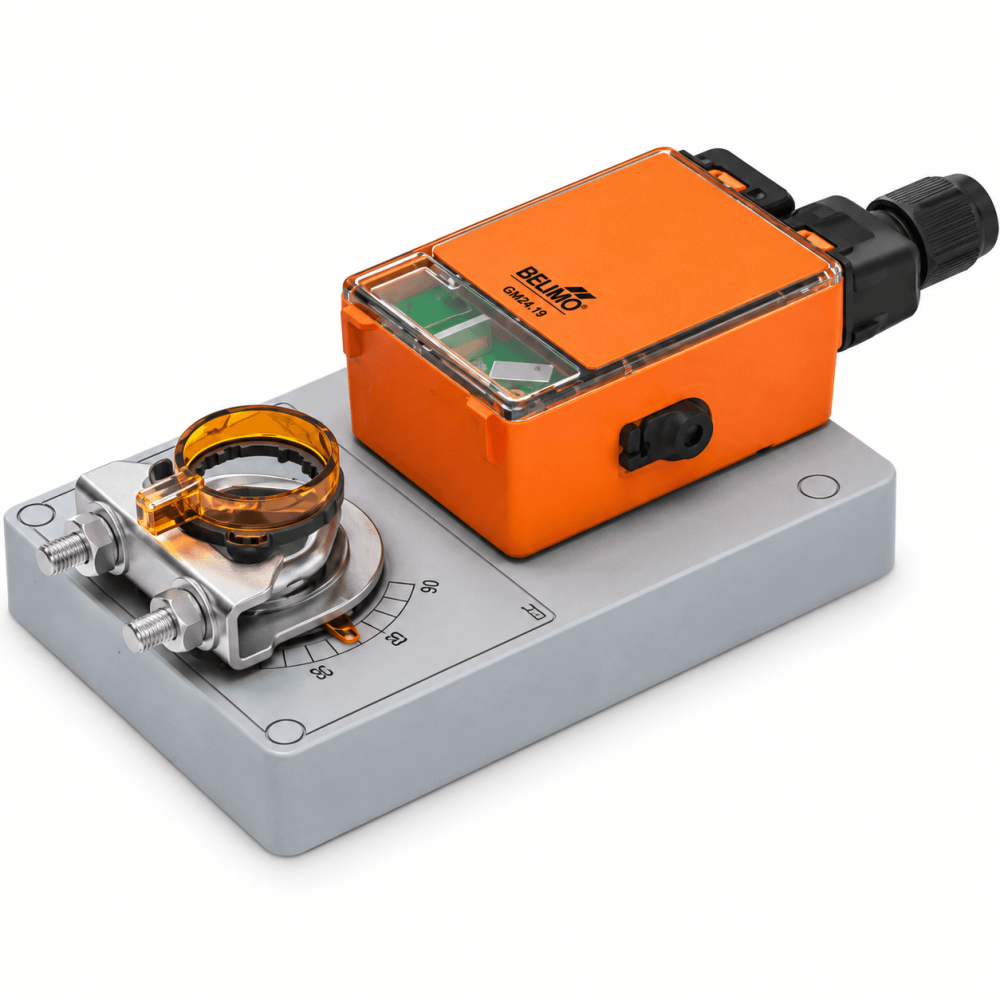
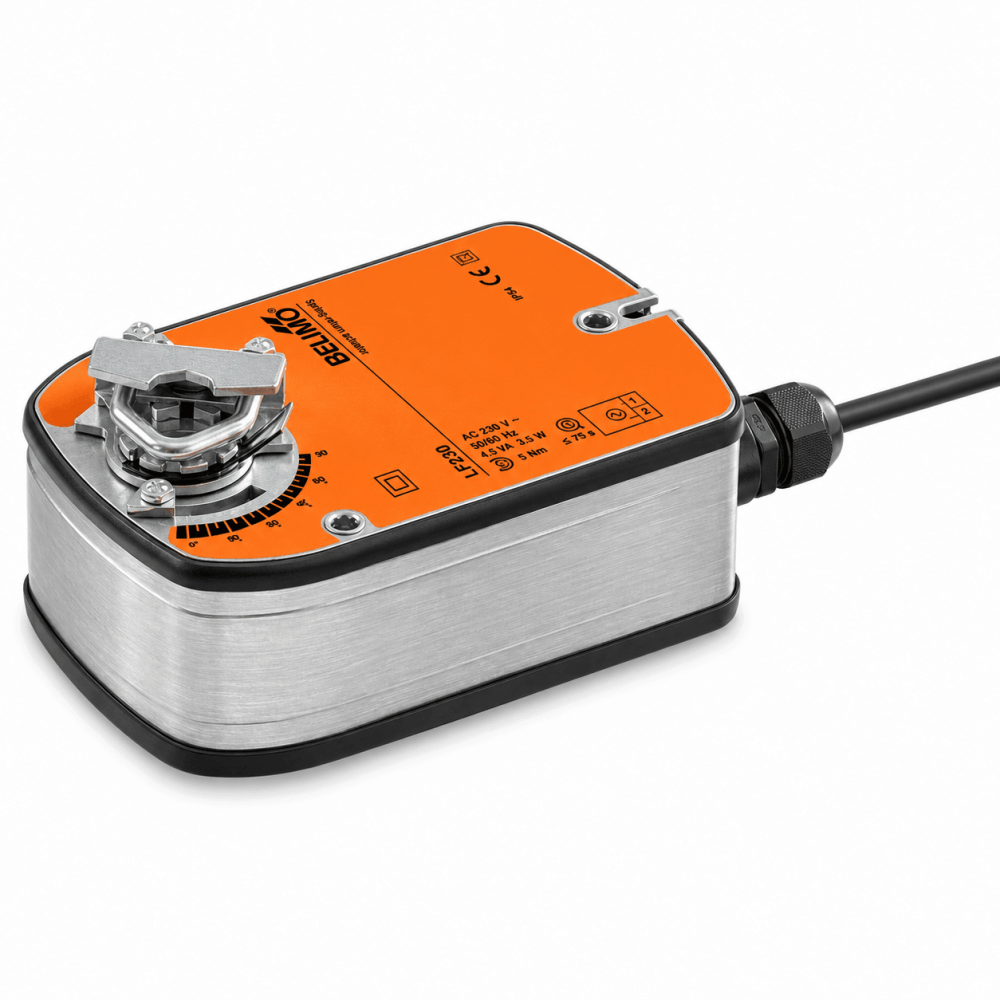
For a modulating application on a characterised control valve, the Belimo NR24A-MP delivers 10 Nm of torque on a 24 V AC/DC supply with a 0 to 10 V control signal, giving continuous positioning without the step changes of on and off control. Where a simple open and close signal is all that is needed on a larger damper, the Belimo GM24.19 handles up to 40 Nm on 24 V with manual override built in. For retrofit projects where existing wiring already runs mains voltage, the Belimo LF230 spring return actuator operates on AC 230 V and drives to a fail safe position automatically on power loss, useful where the spring return considerations covered above apply. All three are stocked at iACS and ship with full datasheets for wiring and sizing reference.
Comment(s)
Recent Posts
-
How to Choose an HVAC Actuator: Torque, Voltage and Signal Type Explained
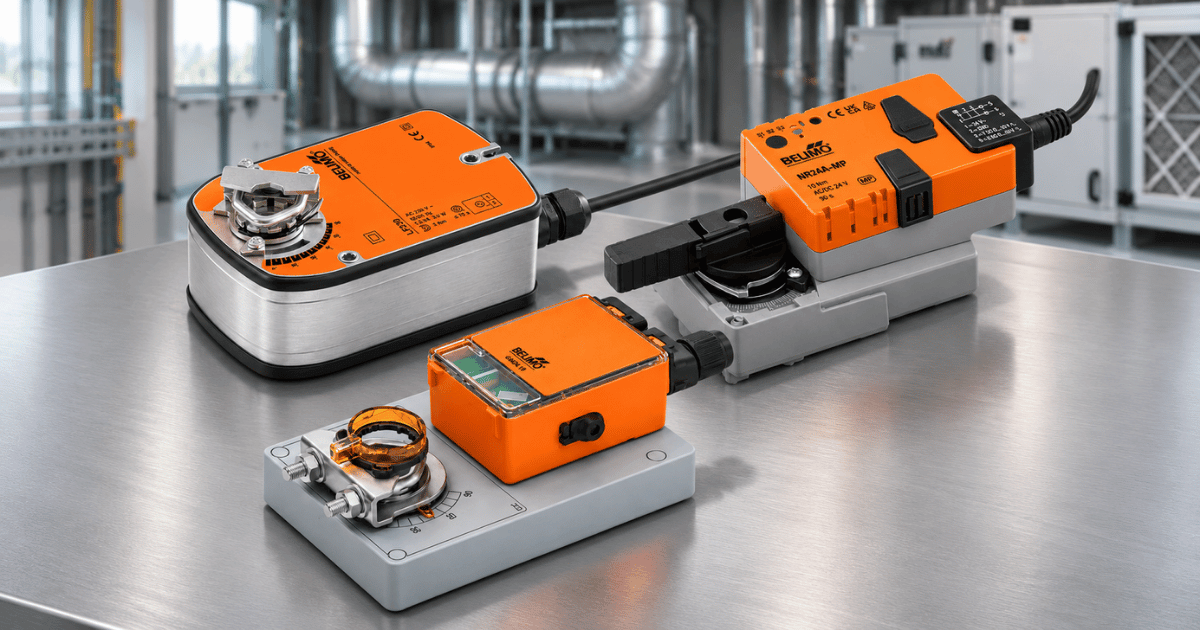 November 3, 2026
-
CO2 Sensors Explained: Demand Controlled Ventilation for Better Air Quality
 November 2, 2026
-
Humidity Sensors Explained: Types and Applications in HVAC
 November 1, 2026
-
Immersion versus Strap On versus Duct Temperature Sensors: Which Should You Choose
 October 26, 2026
-
Water Flow Switch Explained: How It Works and Common Faults
 October 21, 2026