
What Our Customers Are Saying
Immersion versus Strap On versus Duct Temperature Sensors: Which Should You Choose
26
Oct
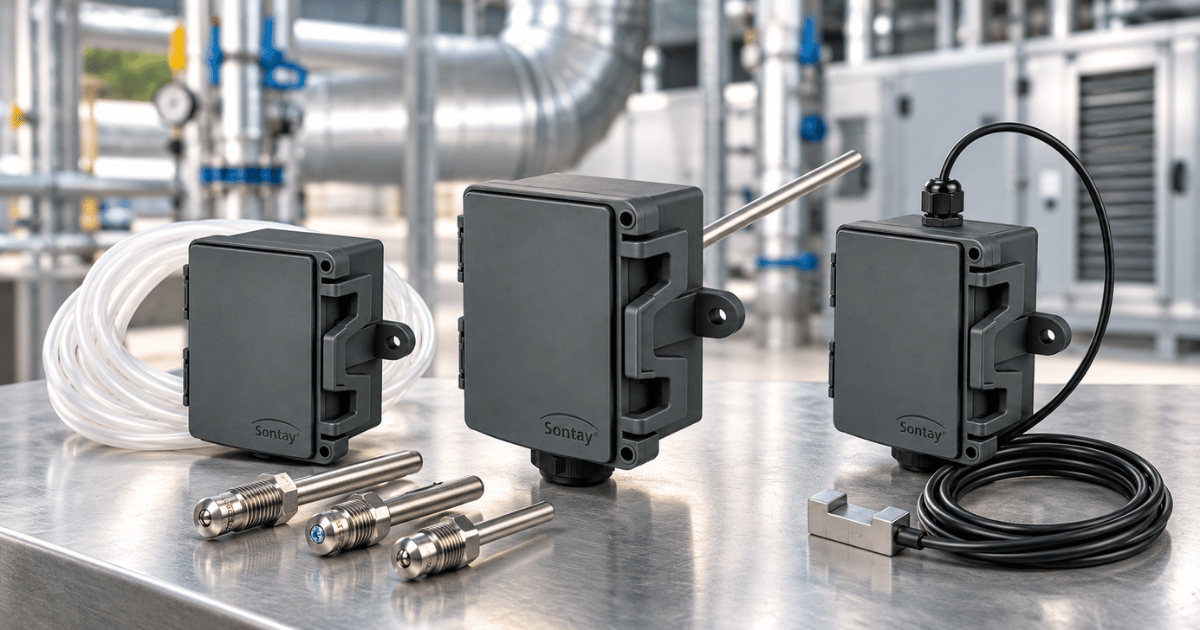
Choose an immersion sensor for the most accurate pipe fluid temperature reading, a strap on sensor when speed of installation matters more than absolute accuracy, and a duct sensor when you need to measure air temperature rather than fluid temperature. Each type suits a different point in the system, and the right choice depends on what you are actually trying to measure.
Immersion Sensors
An immersion sensor fits directly into the pipe using a pocket, placing the sensing element in direct contact with the fluid. This gives the most accurate reading of actual pipe fluid temperature and is the preferred choice wherever precise BMS control depends on that reading, as discussed further in our PT100 sensor guide.
Strap On Sensors
The strap-on sensor is fastened to the exterior of the pipe instead of installing it inside the pipe. This convenience comes at a small cost to accuracy, since the sensor is reading pipe surface temperature rather than the fluid directly, though this is often accurate enough for monitoring rather than tight control applications.
Duct Sensors
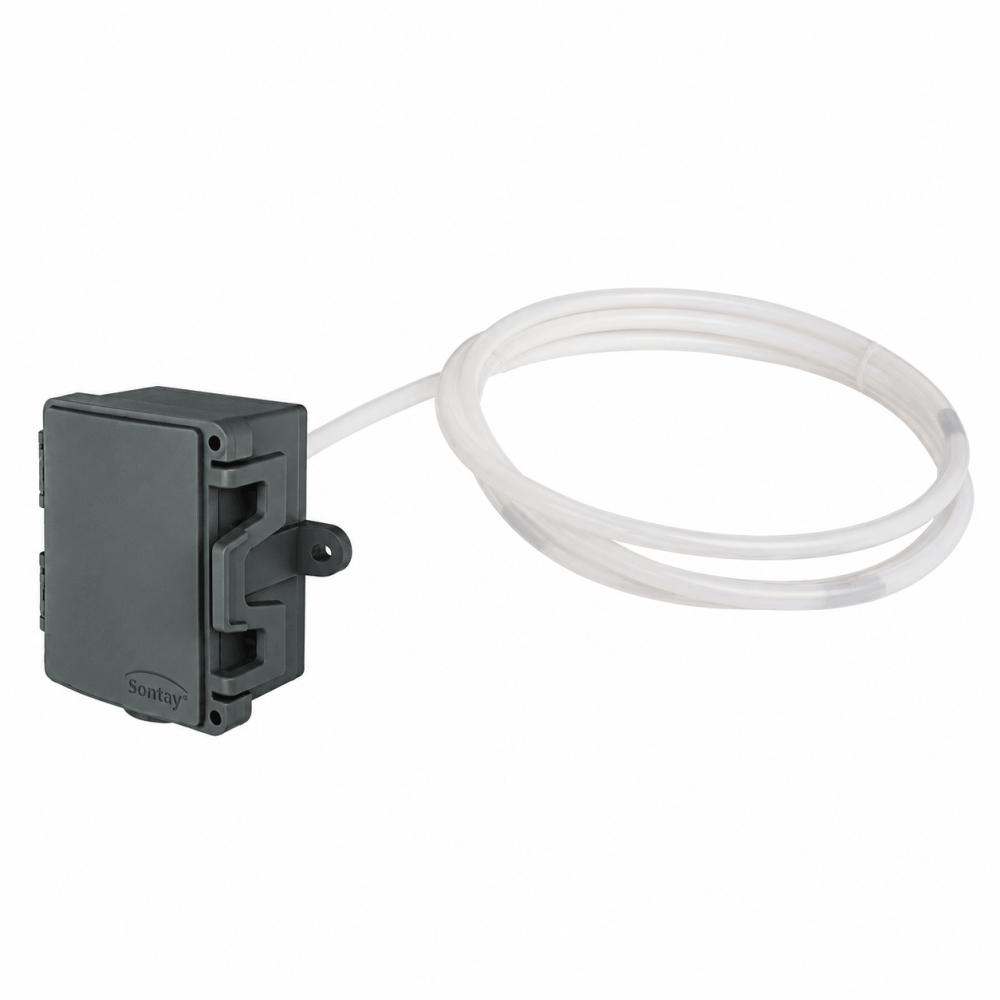
A duct sensor measures air temperature directly within ductwork rather than pipe fluid temperature. A point sensor gives a single reading at one location, sufficient for smaller ducts, while an averaging sensor spans a wider area of a larger duct, giving a more representative reading where temperature stratification across the duct is likely.
Comparison Table
| Immersion | Strap On | Duct | |
|---|---|---|---|
| Accuracy | Highest | Slightly lower | Accurate for air temperature |
| Installation time | Requires draining or a pocket fitted during construction | Fastest | Requires a hole in ductwork |
| Installed cost | Highest, due to installation complexity | Lowest, due to reduced labour | Mid range |
| Typical application | Precise BMS control loops | Retrofit monitoring | AHU and ductwork temperature measurement |
When to Choose Each Type
On a new build, immersion sensors are usually specified from the outset since the pocket can be fitted during installation at minimal extra cost. On a retrofit, strap on sensors are often the pragmatic choice where draining the system to fit an immersion pocket is impractical. Duct sensors are the only sensible choice wherever the reading needed is air temperature rather than pipe fluid temperature.
Frequently Asked Questions
Is a strap on sensor accurate enough for BMS control?
For many monitoring and general control applications, yes, though where the tightest possible control accuracy is required, an immersion sensor reading the fluid directly is the better choice.
When do I need an averaging duct sensor?
An averaging duct sensor is needed on larger ducts where temperature stratification across the duct cross section would make a single point sensor unrepresentative.
Can an immersion sensor be installed without draining the system?
If a pocket is already fitted, the sensor itself can often be changed without draining, but fitting a new pocket into an existing pipe generally requires the system to be drained first.
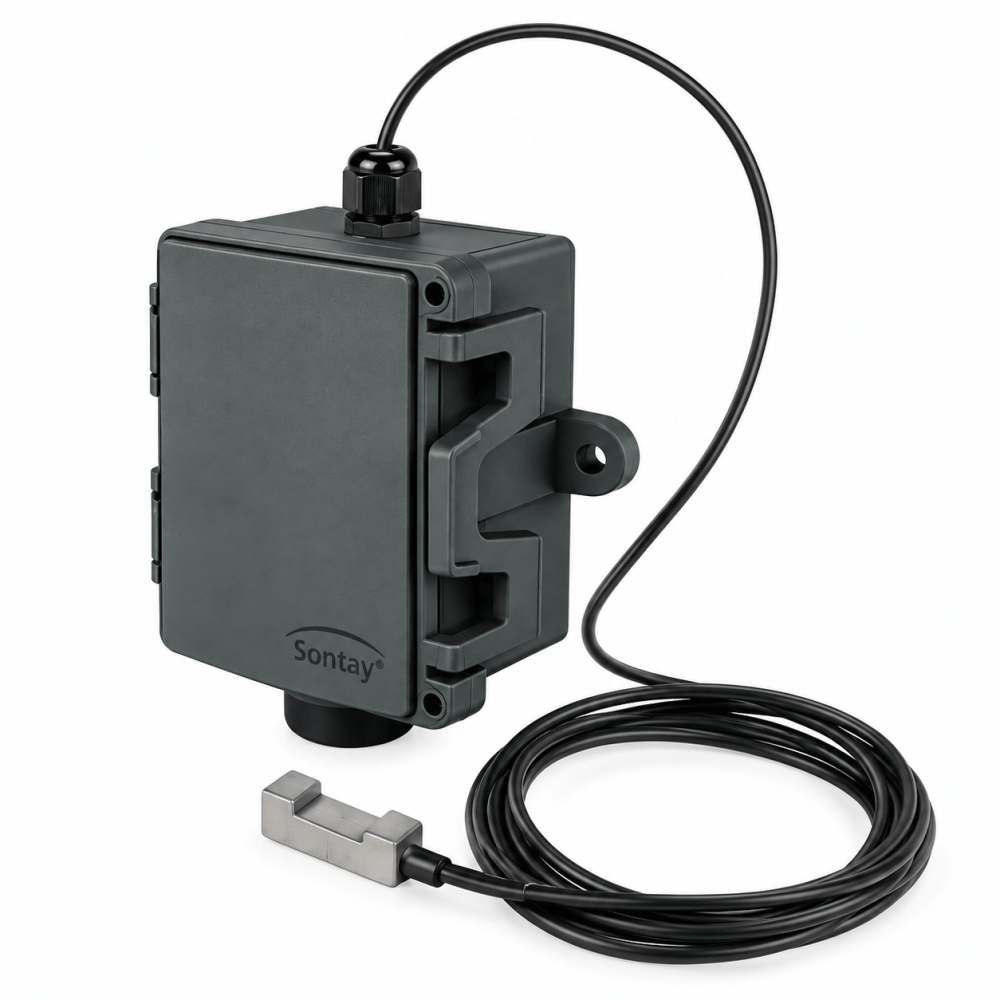
Shop the Sontay Sensor Range
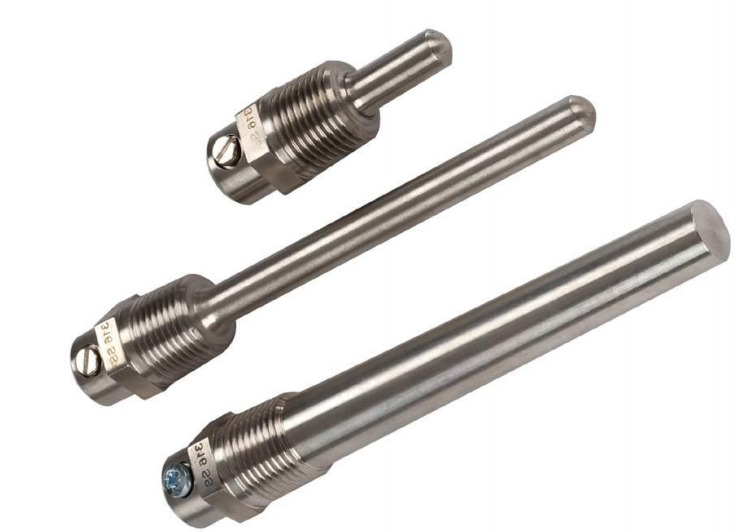
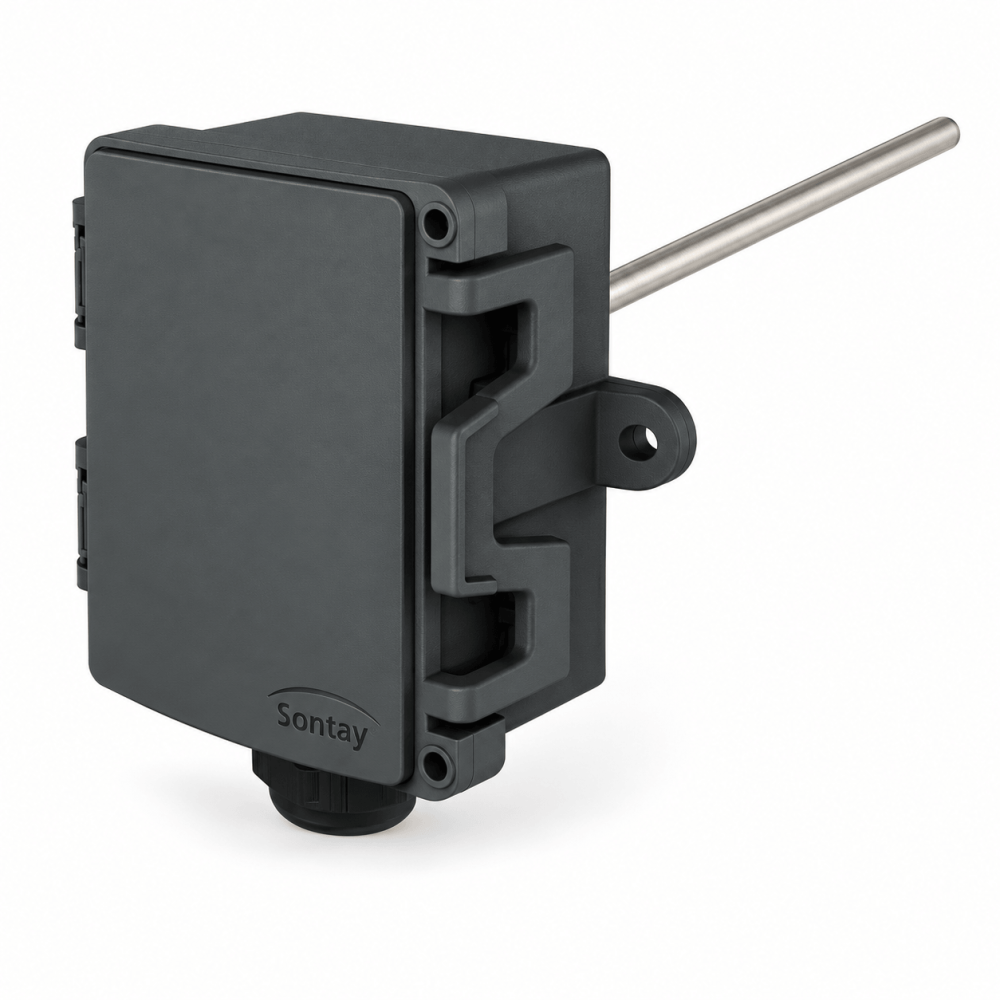
For a precise pipe fluid reading, the Sontay TT-I immersion range covers 10K, PT100 and PT1000 outputs and fits directly into a TT-PO pocket. Where speed of fitting matters more than absolute accuracy, the Sontay TT-C-A clamp on sensor reads pipe surface temperature without draining the system. For ductwork, the Sontay TT-D range covers point measurement in smaller ducts, with an averaging version available for larger ducts where stratification is a factor.
Browse immersion, strap on and duct temperature sensors at iACS Store.
Comment(s)
Recent Posts
-
Immersion versus Strap On versus Duct Temperature Sensors: Which Should You Choose
October 26, 2026
-
Water Flow Switch Explained: How It Works and Common Faults
 October 21, 2026
-
What Is a DDC Controller? Direct Digital Control Explained
 October 20, 2026
-
BACnet versus Modbus versus KNX: Choosing the Right BMS Protocol
 October 19, 2026
-
Variable Frequency Drives Explained: How VFDs Control Pumps and Fans
 October 18, 2026