
What Our Customers Are Saying
EC Fans versus AC Fans Explained: Which Is Right for Your HVAC System
17
Oct
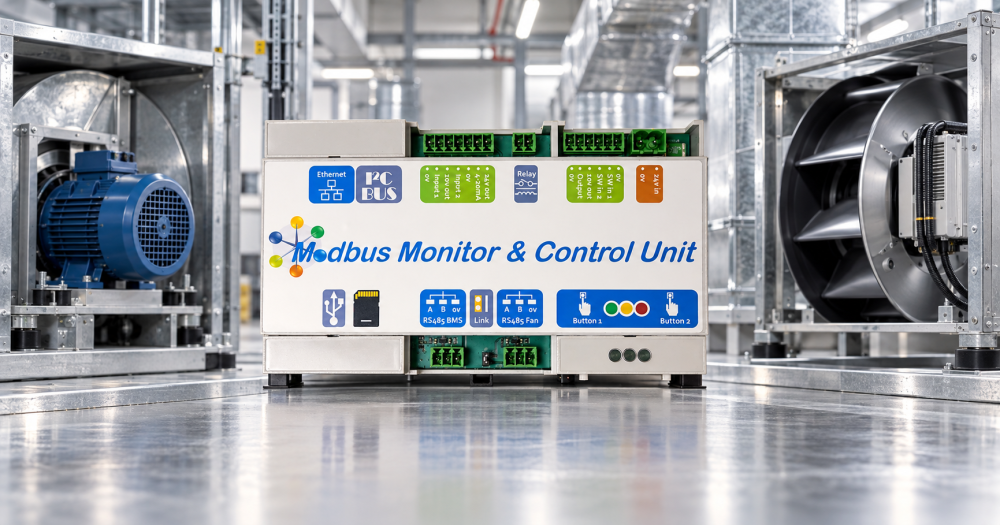
The EC fan has an electronically commutated motor which features a built-in speed controller, which makes it more efficient compared to the normal AC fan while providing more speed control. The cost effectiveness of the extra expenditure, however, is dependent on the operating time and required speed variability.
What Is an AC Fan
An AC fan runs directly from the mains supply at a fixed speed, or in some cases a small number of stepped speeds, using simpler control. This makes AC fans cheaper to buy and straightforward to control with a basic on and off or multi speed switch.
What Is an EC Fan
The EC fan has an electronically commutated motor which features a built-in speed controller, which makes it more efficient compared to the normal AC fan while providing more speed control. The cost effectiveness of the extra expenditure, however, is dependent on the operating time and required speed variability.
Efficiency and Running Cost Comparison
EC fans typically use meaningfully less energy than AC fans running the same duty, with the gap widening the more the fan operates away from full speed, since EC motors maintain efficiency well at part load where AC motors often do not.
Control Options
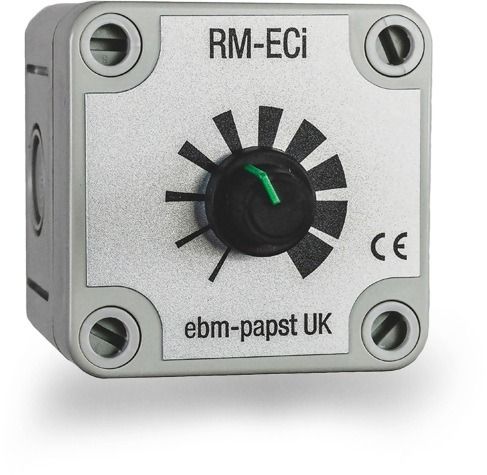
EC fans are typically controlled using a 0 to 10 volt signal, or increasingly via Modbus or BACnet directly, allowing precise integration into a BMS, as covered in our BACnet, Modbus and KNX guide. AC fans are usually controlled with simpler on and off switching or a small number of fixed speed steps, sufficient for less demanding applications.
Noise and Lifespan Considerations
EC fans generally run quieter at part load than AC fans, since they are not simply cycling a fixed speed motor on and off to approximate a lower average output. EC motors also tend to have a longer service life due to reduced mechanical wear from soft, electronically controlled starting.
When AC Still Makes Sense
For basic uses where the number of hours of operation is very small, the higher energy efficiency of an EC fan may not return the investment sufficiently fast to make the additional cost worth it.
Frequently Asked Questions
Are EC fans worth the extra cost?
In applications with significant running hours or a need for variable speed control, yes, the efficiency gains typically justify the higher upfront cost within a reasonable payback period.
What is the typical payback period for an EC fan upgrade?
This varies by application and running hours, but many commercial retrofits see payback within a few years through reduced energy consumption.
Can EC fans be retrofitted to an existing AHU?
In many cases yes, provided the physical mounting and airflow characteristics are compatible, though this is worth confirming against the specific AHU model before ordering.
iACS Featured Products: ebm papst EC Fans and Control
iACS stocks the full ebm papst EC fan range, covering axial and centrifugal fans across the compact, AxiCool and RadiCal series, all built on ebm papst's GreenTech EC platform for the efficiency and part load performance covered above.
For sites running multiple EC fans, the ebm papst CN1127 MMCU Ethernet Module is worth specifying alongside them. It manages up to 99 ebm papst EC fans over a Modbus RTU network from a single Ethernet connected controller, with auto addressing to cut commissioning time and support for constant pressure, constant volume and proportional control strategies. It also connects to the ebm papst Insights Dashboard for remote monitoring and fault detection, which suits AHU retrofits moving from basic on and off control up to full BMS integration.

Browse EC and AC fans from ebm papst at iACS Store.
Comment(s)
Recent Posts
-
EC Fans versus AC Fans Explained: Which Is Right for Your HVAC System
 October 17, 2026
 -
Steam Humidifier Explained: How HygroMatik Humidification Systems Work
 October 16, 2026
 -
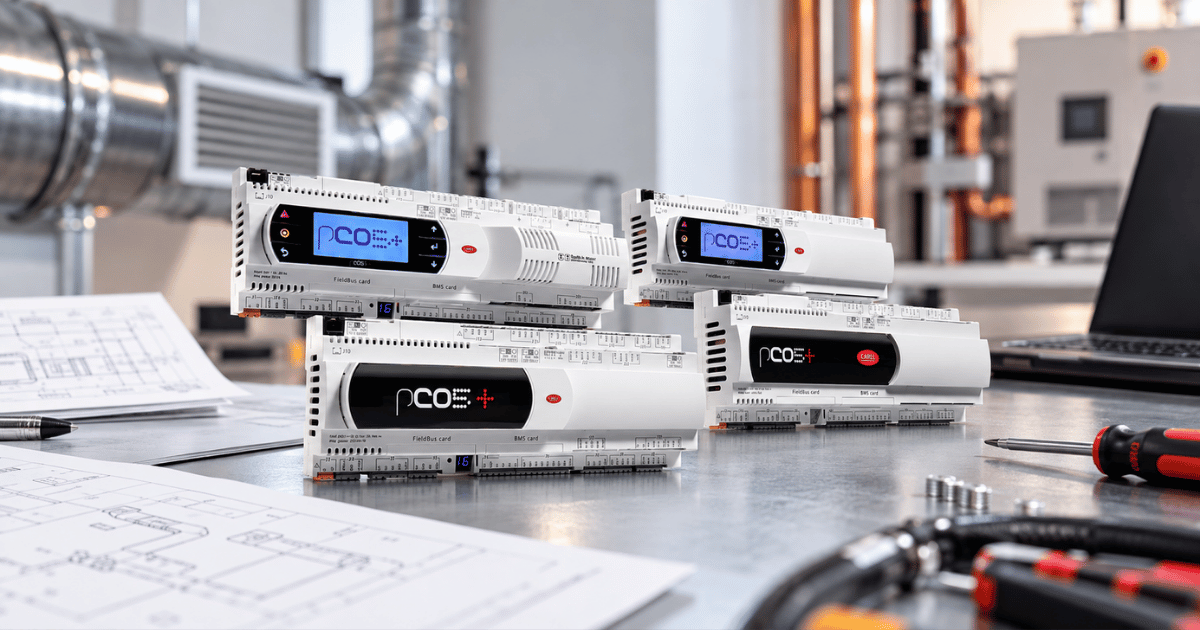
Carel Controller Fault Codes Explained: A Troubleshooting Guide
 October 15, 2026
 -
Damper Actuator Not Working? How to Diagnose and Fix Common Faults
 October 2, 2026
 -
VAV Box Explained: How Variable Air Volume Systems Control Airflow
 October 1, 2026