
What Our Customers Are Saying
Damper Actuator Not Working? How to Diagnose and Fix Common Faults
2
Oct
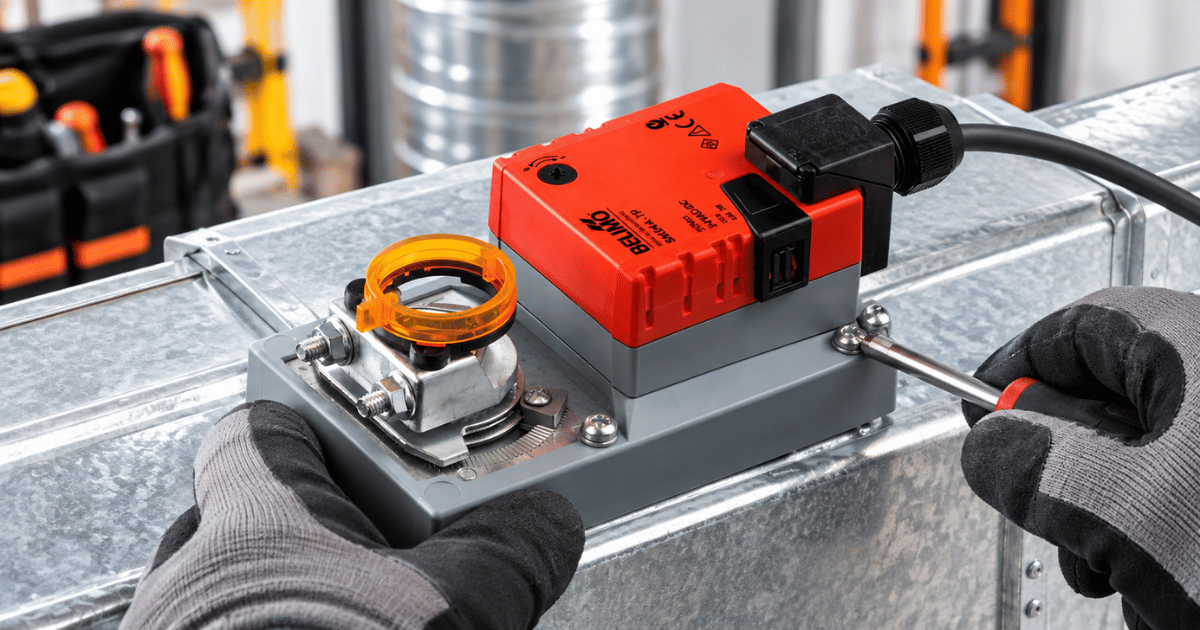
Table of Contents:
- How a Damper Actuator Works
- Diagnosing the Fault
- Common Faults and Fixes Table
- Spring Return Damper Actuator Faults
- Choosing a Replacement Actuator
- Frequently Asked Questions
- Recommended Replacement Actuators
Damper actuator opening, closing, or maintaining a fixed position problems may arise from the following; power supply problems, signal input problems, or a frozen damper blade. However, testing for the above mentioned problems using a manual override test will easily solve the problem. Following the steps below will help fix most damper actuator problems without replacement.
How a Damper Actuator Works
A damper actuator converts an electrical control signal into rotary movement, turning the damper blade to open or close the air path. Depending on the application, this may be a simple on and off actuator or a modulating actuator holding any position in between, as covered in our actuator selection guide.
Diagnosing the Fault
Test supply voltage at the terminals of the actuator, ensuring that it is actually supplied to the component. The control signal should be tested separately because the actuator might be energised but unable to function if it is not getting a correct signal from the controller. Manual testing of the damper blade movement by moving it manually where possible is the best way to check for blade movement restrictions.
Common Faults and Fixes Table
If an actuator does not move at all, then chances are that there is either a loss of power or there is a problem with the motor, which requires checking the voltage and replacing the motor if it has malfunctioned. If an actuator moves but the damper does not respond, then the actuator has been disengaged from the damper spindle. An actuator that overheats or trips typically indicates it is working against a seized damper blade, straining the motor. A damper stuck in one position, with the actuator otherwise appearing to run normally, usually points to the damper blade itself being seized or obstructed.
Spring Return Damper Actuator Faults
On fire dampers specifically, a spring return actuator that fails to return the damper to its fail safe position on loss of power is a safety critical fault and should be treated as a priority repair, with the fail safe principle covered fully in our spring return actuator guide.
Choosing a Replacement Actuator
Choose the torque, voltage, and kind of control signal based on the current installation rather than taking the approach that any actuator with the same size will be appropriate, because a smaller one would have problems with the same damper that probably caused the initial failure.
Frequently Asked Questions
What are the signs of a failed damper actuator?
Signs to look out for include lack of movement of the damper blade, partial opening and closing movement of the blade, or overheating of the actuator motor.
What are the telltale signs of a fault in the damper that is either electrical or mechanical?
Testing of the voltage and control signals to the actuator determines if the problem is electrical, while testing of manual override of the damper blade determines whether it is mechanical.
What is the average lifespan of a damper actuator?
A well specified, correctly sized damper actuator typically lasts 10 to 15 years, though actuators regularly working against a stiff or partially seized damper tend to fail earlier.
Recommended Replacement Actuators
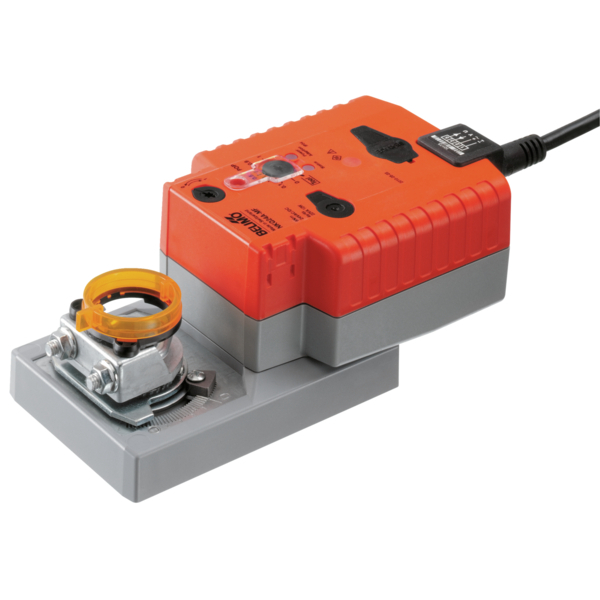
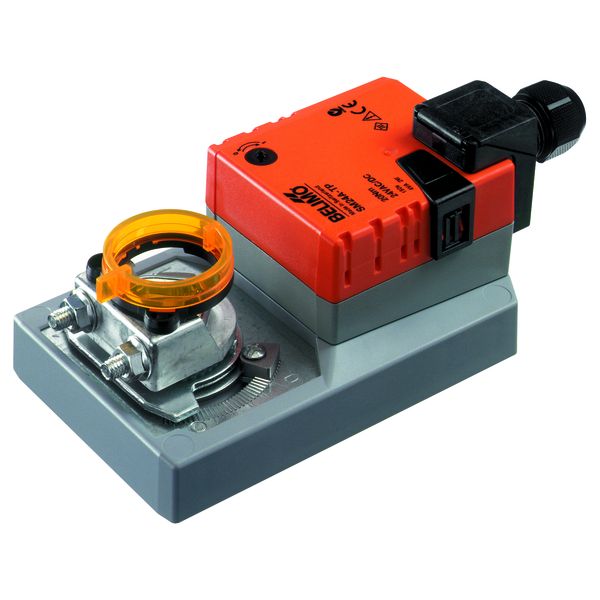
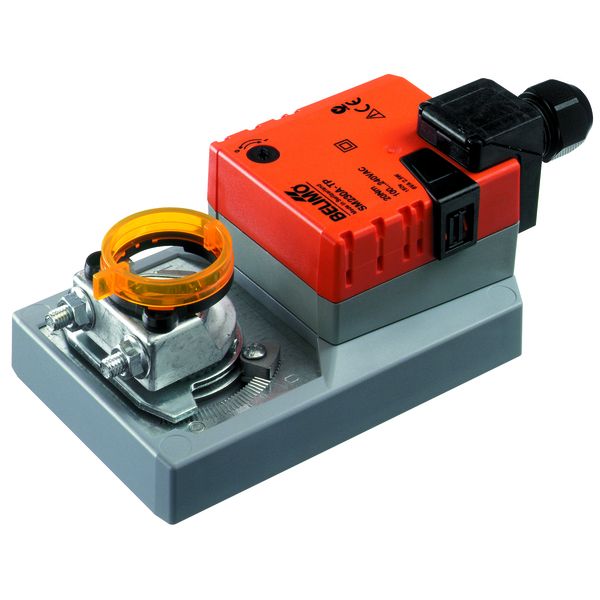
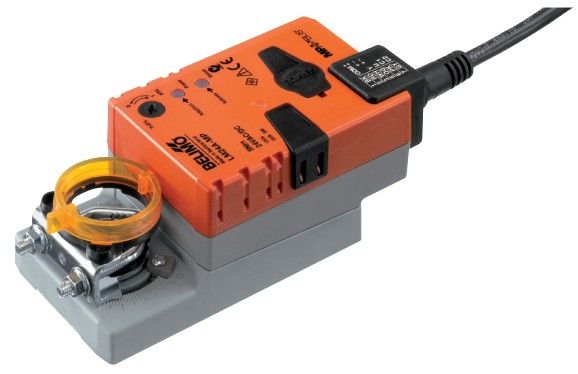
Belimo covers most standard replacements. The Belimo SM24A-TP is a 20 Nm on/off actuator running on 24V AC/DC, suited to smaller dampers with a simple open close signal, while the Belimo SM230A-TP covers the same duty on a 230V supply. For lighter duty applications, the Belimo LM24A-MP offers 5 Nm of modulating torque on a 24V supply.
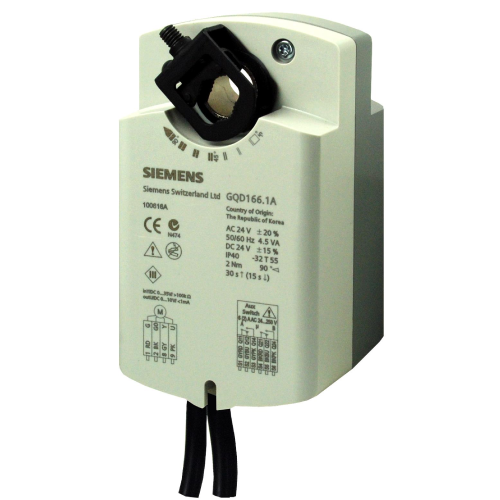
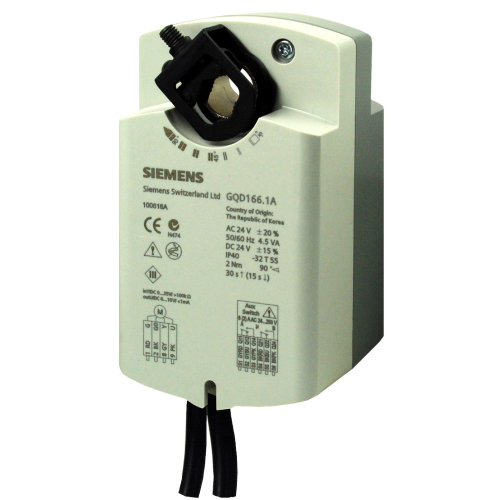
Where the damper is a fire damper or otherwise requires a fail safe position, a spring return actuator is essential rather than optional. The Siemens GQD166.1A provides spring return with 2 Nm torque and two auxiliary switches for position feedback, while the Belimo SM230ASR-TP offers 20 Nm spring return on a 230V supply for larger dampers.
Always match torque, voltage and control signal to the original specification. Browse the full range of rotary damper actuators or linear damper actuators at iACS Store.
Replacement damper actuators in stock. Browse the range at iACS Store.
Comment(s)
Recent Posts
-
Steam Humidifier Explained: How HygroMatik Humidification Systems Work
 October 16, 2026
 -
Carel Controller Fault Codes Explained: A Troubleshooting Guide
 October 15, 2026
 -
Damper Actuator Not Working? How to Diagnose and Fix Common Faults
October 2, 2026
-
VAV Box Explained: How Variable Air Volume Systems Control Airflow
 October 1, 2026
 -
Replacing a CAREL pLDPRO Display: pGDn Options, Fit Checks and Affected Part Numbers
 September 23, 2026