
What Our Customers Are Saying
Carel Controller Fault Codes Explained: A Troubleshooting Guide
15
Oct
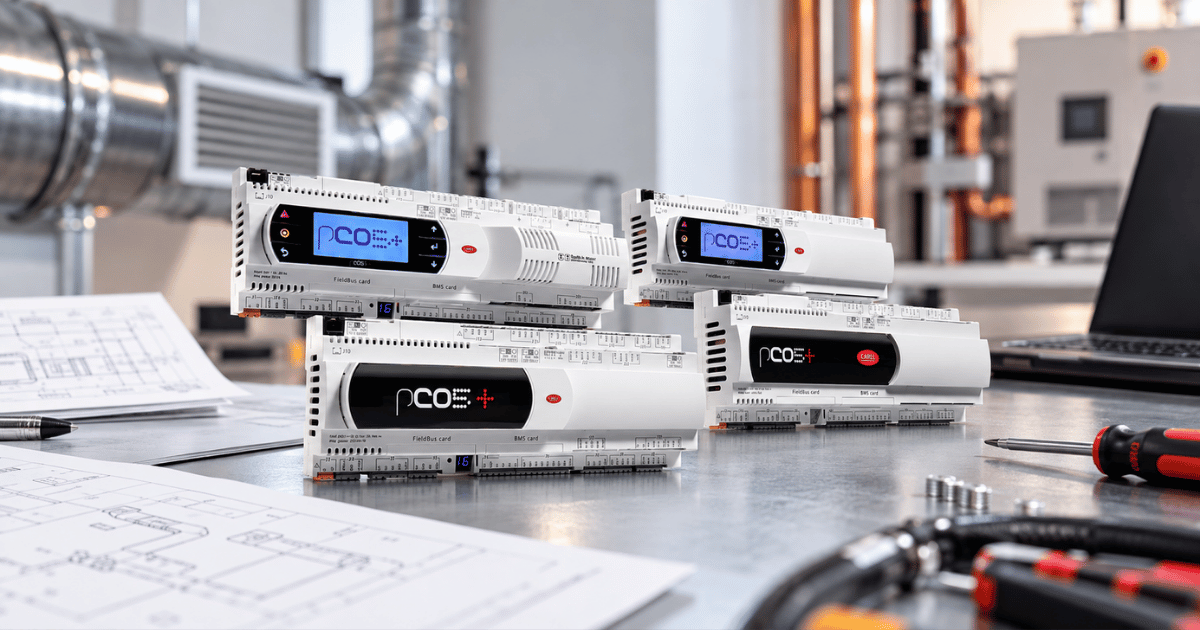
A Carel controller alarm or fault code appears on the unit's display and points to a specific issue, ranging from a faulty sensor to a communication fault or a safety trip. Reading the code correctly and working through the likely cause in order is far faster than guessing at a repair.
How Carel Alarm Codes Are Structured
The categories for alarms that Carel controllers have usually include probe failure where the data obtained from the sensor is not within the expected value or is nonexistent; communication failure where there is a loss of connection between the controller and other devices; compressor and defrost failure which pertains to the use of the controller in refrigeration and heat pumps; and safety trip which includes high pressure and overload.
Common Carel Fault Codes and What They Mean
The probe fault code indicates that the signal from the sensor lies outside the expected range or that the sensor has been disconnected and needs to be inspected for wiring and then tested using resistance of the sensor. The communication fault code indicates that there has been a loss of communication between the controller and the linked device and can be corrected by inspecting the network wiring and taking corrective measures before considering that the part is faulty. The high-pressure or safety trip code indicates that an actual limit has been reached and must not be repeatedly reset until the root cause is determined.
How to Reset a Carel Controller Alarm
However, many of these types of faults will correct themselves if the problem is fixed, which in the case of a fault, may be something like a loose wire connection. On the other hand, if there is a safety trip, this will often need to be manually reset after the problem is sorted out.
When a Fault Points to a Faulty Sensor versus a Wiring Issue
Start with a visual inspection of the wiring at both ends of the sensor run, since a loose or corroded connection is the more common cause. If wiring checks out, test the sensor's resistance against the manufacturer's reference values at the current temperature, a technique covered in more depth in our PT100 sensor guide, to confirm whether the sensor itself has failed.
Stopping Recurring Faults
Recurring faults can often be attributed to an uncalibrated sensor in the beginning. Incorporating the checking of the probe and wire connections periodically in the plan for maintenance will help prevent the problem from becoming a fault code.
Frequently Asked Questions
What do I do if a Carel alarm will not clear?
Confirm the underlying cause has genuinely been resolved before attempting a reset, since repeatedly resetting a safety trip without addressing the cause risks equipment damage.
Does a fault code always mean a part has failed?
No, many fault codes, particularly probe and communication faults, are caused by a loose connection or a wiring issue rather than a failed component.
Where can I find a wiring diagram for my Carel controller?
Carel's official technical documentation, available through their website, covers wiring diagrams for each controller model, and iACS can also assist in locating the correct documentation for a specific unit.
Carel Controllers Covered in This Guide
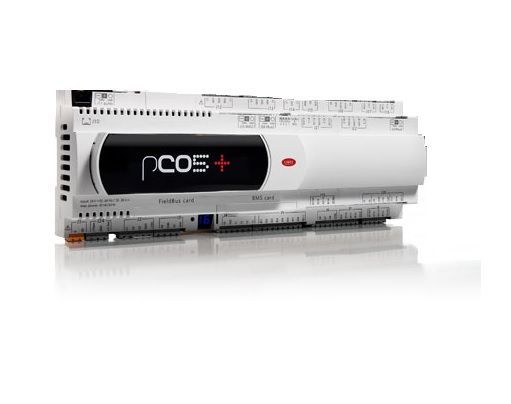
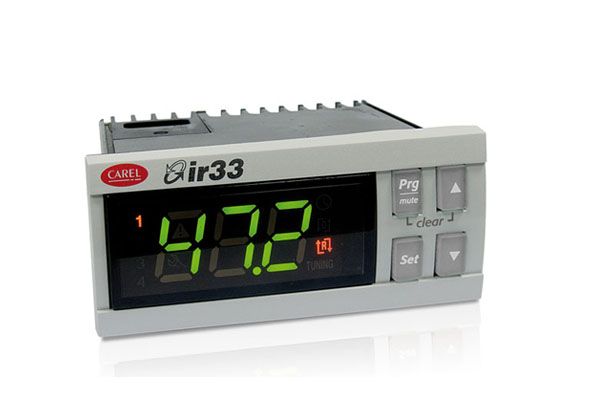
Fault and alarm codes vary slightly between controller families, so it helps to know which unit you're working on. The Carel pCO5plus is the programmable controller most commonly fitted to larger HVAC and chiller plant, and its alarm log can be read directly from the display or via a connected pGD terminal. The Carel IR33 Universal Controller is a simpler panel or DIN rail mounted option, widely used on smaller refrigeration and AHU applications, with probe and safety alarms shown as short flashing codes. For dedicated refrigeration duty, our full range of Carel Refrigeration Controllers covers the parametric units most likely to throw a high pressure or compressor safety trip. If you are unsure which controller is fitted, the model number on the front label will match one of these ranges and confirm which data sheet to check for the exact code list.
Shop Carel controllers, probes and spares at iACS Store.
Comment(s)
Recent Posts
-
EC Fans versus AC Fans Explained: Which Is Right for Your HVAC System
 October 17, 2026
 -
Steam Humidifier Explained: How HygroMatik Humidification Systems Work
 October 16, 2026
 -
Carel Controller Fault Codes Explained: A Troubleshooting Guide
October 15, 2026
-
Damper Actuator Not Working? How to Diagnose and Fix Common Faults
 October 2, 2026
 -
VAV Box Explained: How Variable Air Volume Systems Control Airflow
 October 1, 2026