
What Our Customers Are Saying
Steam Humidifier Explained: How HygroMatik Humidification Systems Work
16
Oct
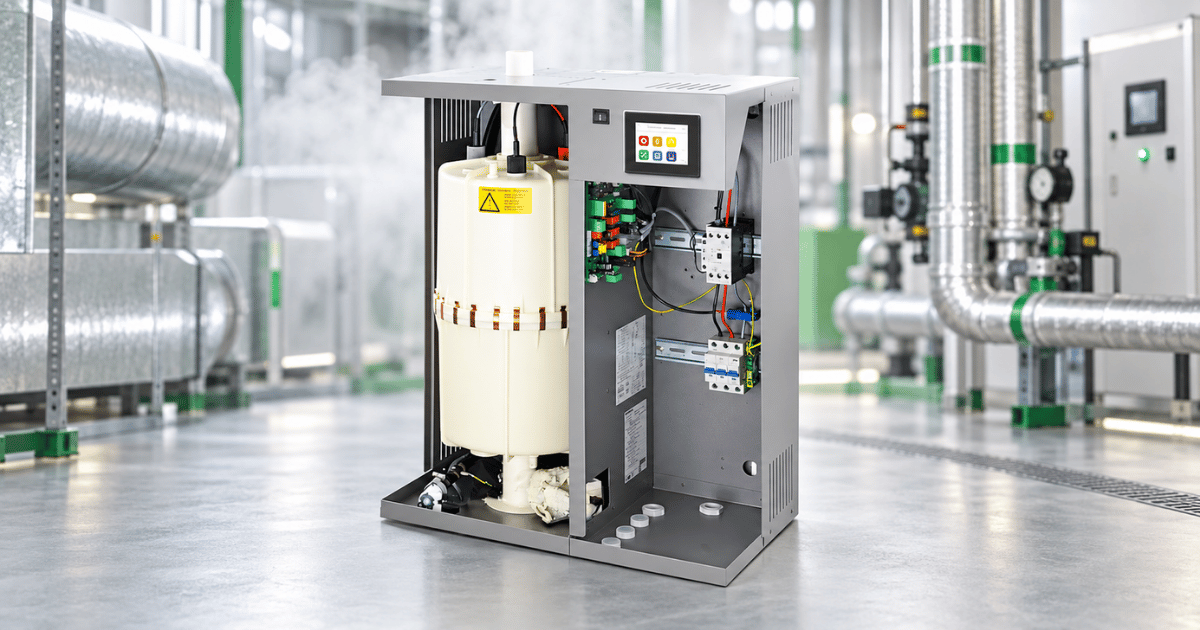
The steam humidifier helps humidify the indoor air by heating up water to produce steam and then distributing the steam through the ductwork or into the room, solving the problem of a lack of humidity during winter. Sizing and controlling one correctly means matching its output to the actual moisture demand of the building.
The Importance of Humidification for HVAC
Low levels of relative humidity, which are typical in heated buildings during winter months, are associated with dry skin and respiratory problems, higher levels of static electricity, which may interfere with equipment performance, and in certain conditions, greater viability of airborne viruses. An optimal level of humidity not only increases comfort but also enhances functionality of particular systems.
How a Steam Humidifier Works
An electrode boiler type generates steam by passing an electric current directly through the water, using the water's own conductivity as the heating mechanism. A resistive element type instead uses a heating element submerged in the water, similar in principle to a kettle. In either case, the resulting steam is distributed into the ductwork or directly into the space through a dedicated distribution pipe.
Types of Humidification Systems
Steam humidifiers boil water directly and are effective across a wide range of water qualities, at higher energy cost than some alternatives. Ultrasonic humidifiers use high frequency vibration to create a fine water mist without heating the water, at lower energy cost but with stricter water quality requirements. Adiabatic systems, including some ultrasonic types, cool the air slightly as they humidify it, useful in cooling dominated applications. Evaporative systems pass air over a wetted media, humidifying without a fine mist, commonly used in larger central systems.
Sizing a Steam Humidifier
Sizing is based on output in kilograms of steam per hour, matched to the moisture load created by the space's air changes, occupancy and the target humidity increase required. Undersizing leaves the system unable to hit target humidity in the coldest conditions, while oversizing wastes both capital cost and running cost.
Controlling a Steam Humidifier with a BMS
A humidity sensor, covered in full in our humidity sensors guide, feeds a reading back to the BMS, which then modulates the humidifier's output to hold a target relative humidity set point, typically alongside a high limit duct humidity sensor to prevent condensation risk downstream.
Maintenance Considerations
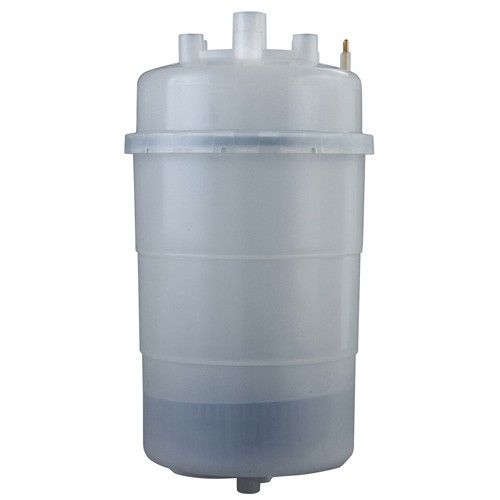
Scale build up inside the boiling chamber is the most common maintenance issue on steam humidifiers, particularly in hard water areas, and most units use a replaceable cylinder specifically to manage this rather than requiring the whole unit to be descaled. The water quality should be measured periodically against the specification of the manufacturer so that no early wear of cylinders is experienced.
FAQs
What are the differences between steam and ultrasonic humidifiers?
Steam humidifiers boil water to make water vapour and accept a larger variety of water sources, whereas ultrasonic humidifiers use vibrations to create water vapour with lower power consumption but require higher-quality water sources.
How do I size a steam humidifier for my building?
Sizing is based on the moisture load of the space, calculated from air changes, occupancy and the target humidity increase, matched against the humidifier's output in kilograms of steam per hour.
How often does a steam humidifier need maintenance?
This depends heavily on local water hardness, but most systems use a replaceable cylinder specifically designed to manage scale build up, checked and replaced on a schedule recommended by the manufacturer.
Featured HygroMatik Products at iACS
iACS stocks the full HygroMatik range across capacities and applications. Compact Steam units suit smaller commercial spaces such as offices and server rooms, while the Gas Steam and Heater Steam ranges scale up for larger commercial and industrial demand. Home Steam is sized for residential and light commercial installations, and the Flexline series offers a compact footprint for retrofit projects. Replacement cylinders, electrodes and solenoid valves are held in stock for all these ranges, keeping downtime to a minimum when a unit needs a service part rather than a full replacement.
Browse the full HygroMatik and Carel humidifier range at iACS Store, or shop humidifier spares and cylinders directly.
Browse HygroMatik humidification systems and spares at iACS Store.
Comment(s)
Recent Posts
-
Steam Humidifier Explained: How HygroMatik Humidification Systems Work
October 16, 2026
-
Carel Controller Fault Codes Explained: A Troubleshooting Guide
 October 15, 2026
 -
Damper Actuator Not Working? How to Diagnose and Fix Common Faults
 October 2, 2026
 -
VAV Box Explained: How Variable Air Volume Systems Control Airflow
 October 1, 2026
 -
Replacing a CAREL pLDPRO Display: pGDn Options, Fit Checks and Affected Part Numbers
 September 23, 2026