
What Our Customers Are Saying
Pressure Independent Control Valves Explained: PICVs versus Traditional Valves
4
Nov
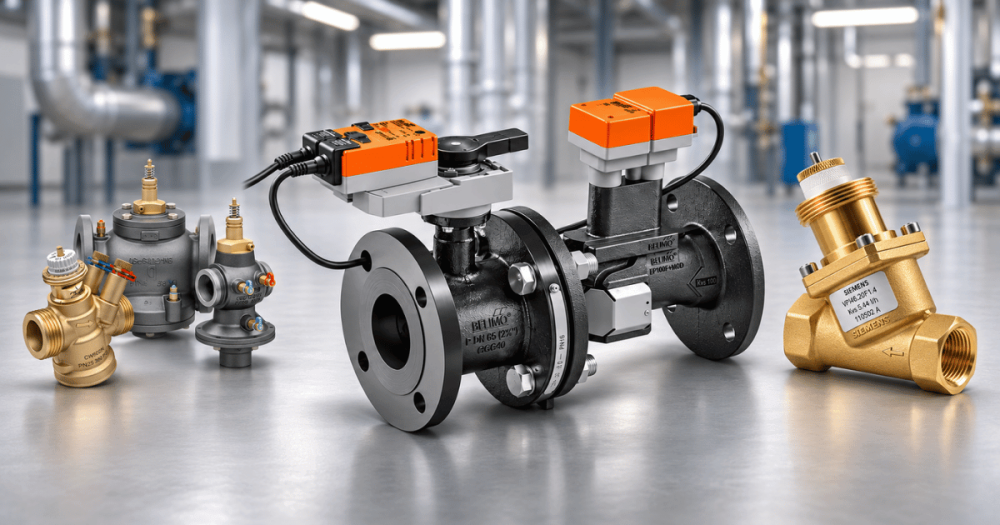
A PICV, or pressure independent control valve, combines a flow limiter and a modulating control valve in one body, holding flow constant regardless of pressure changes elsewhere in the system. This differs from a traditional two port valve, which requires the wider system to be properly hydraulically balanced to perform reliably.
What Is a Pressure Independent Control Valve
A PICV automatically compensates for pressure variation across the system, delivering the flow rate the control signal calls for regardless of what else is happening elsewhere on the same circuit. This is achieved by combining a flow regulating element with the modulating control valve in a single body.
How a PICV Differs from a Traditional Two Port Valve
A traditional two port valve, covered in our fan coil unit guide, relies on the wider system being correctly balanced so that pressure at the valve stays within its designed range. If the system is not properly balanced, or if pressure changes as other valves open and close elsewhere, a traditional valve's control performance suffers. A PICV compensates for this automatically, without needing the same level of system wide balancing.
Benefits of a PICV
Commissioning is simplified since less time is needed balancing the wider hydraulic system. Part load control is improved, since the valve continues to deliver accurate flow even as system pressure varies through the day. The risk of starving distant terminal units, a common problem on poorly balanced traditional systems, is significantly reduced.
When a Traditional Valve Is Still Appropriate
On smaller, simpler systems where hydraulic balancing is straightforward and pressure variation across the system is minimal, a traditional two port valve remains a perfectly appropriate and lower cost choice.
Sizing a PICV
Rather than sizing purely against Kvs as with a traditional valve, a PICV is selected primarily against the required flow rate directly, since the valve's internal regulating mechanism handles pressure variation automatically. This is a key difference from traditional valve selection, covered in our actuator selection guide, and should be checked carefully against manufacturer sizing tools.
Frequently Asked Questions
Does a PICV need a separate balancing valve?
No, a PICV's built in flow regulation removes the need for a separate balancing valve on that specific circuit, which is one of its main commissioning advantages.
What are typical applications for a PICV?
PICVs are commonly specified on fan coil units and other terminal units in larger commercial buildings where hydraulic balancing across many circuits would otherwise be complex and time consuming.
Is a PICV more expensive than a traditional valve and balancing valve combination?
The PICV itself often costs more than a basic two port valve alone, but once the cost and time of separate balancing is factored in, the total installed cost is frequently comparable or favourable.
Highlighted Products
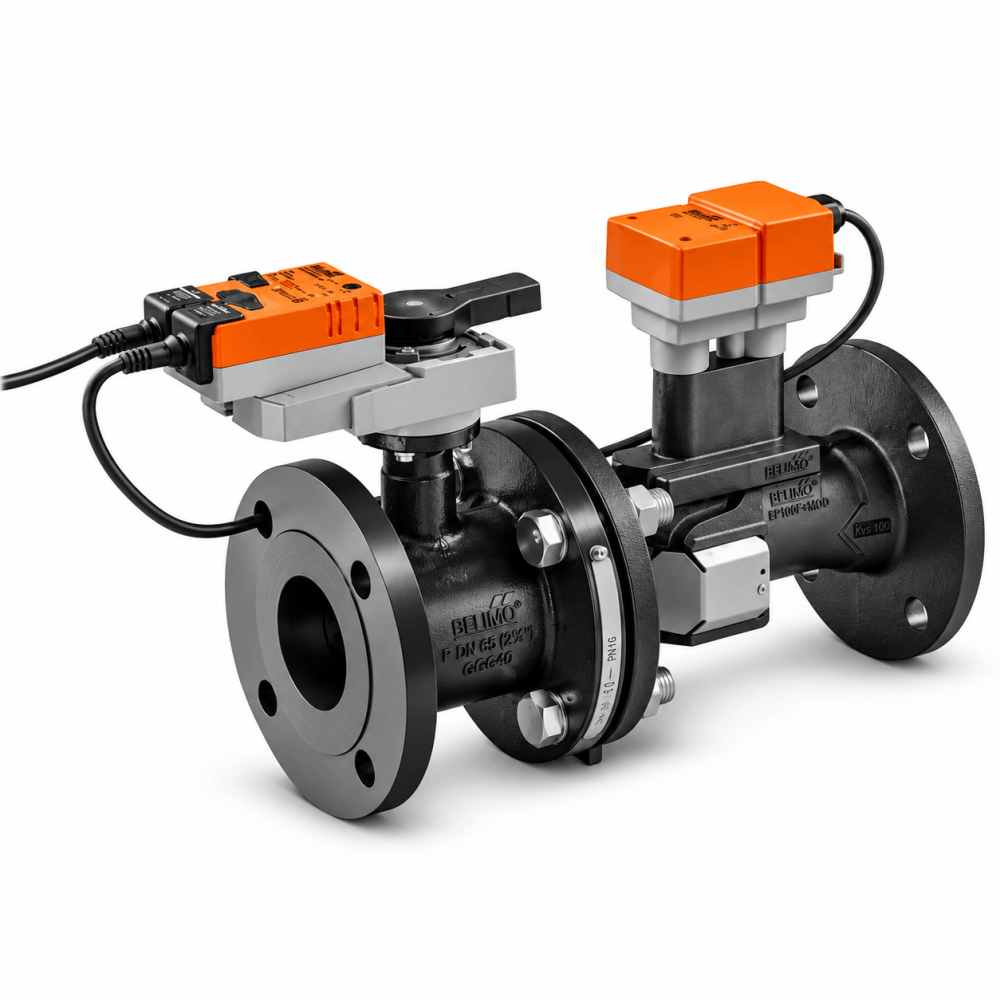
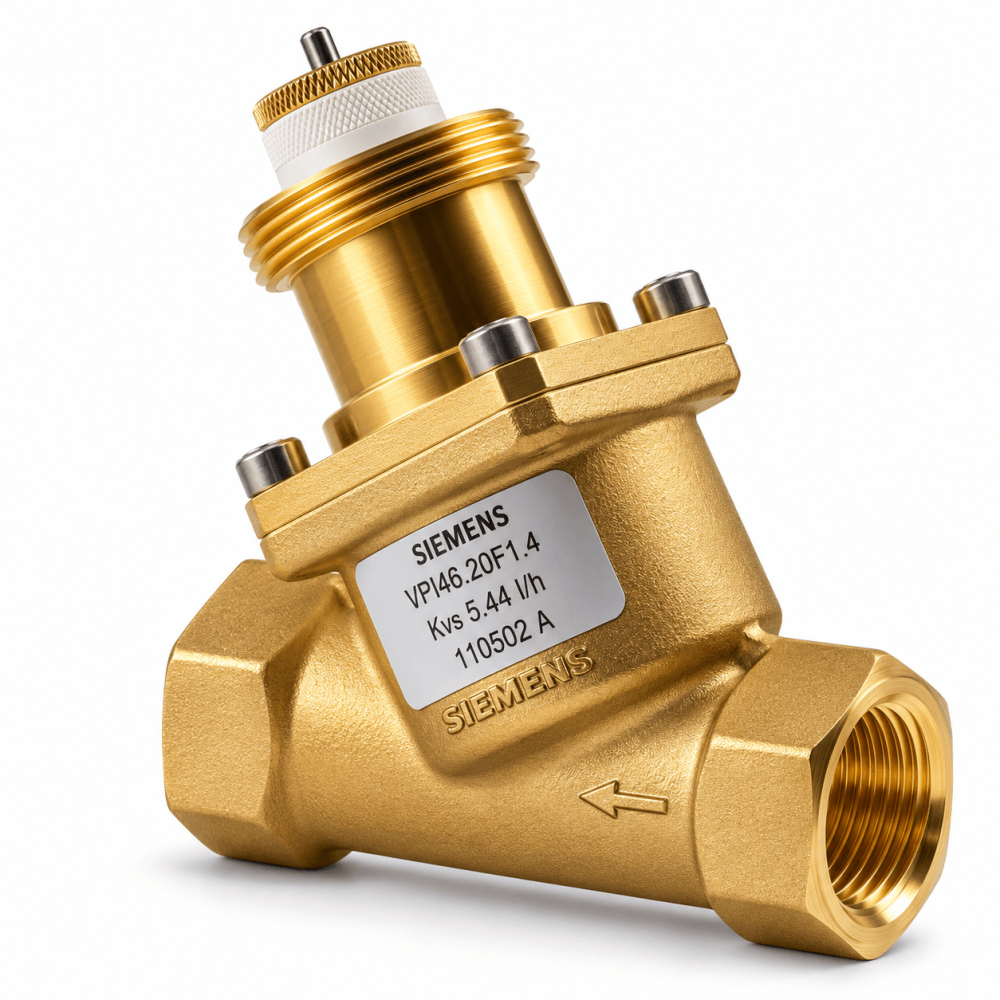
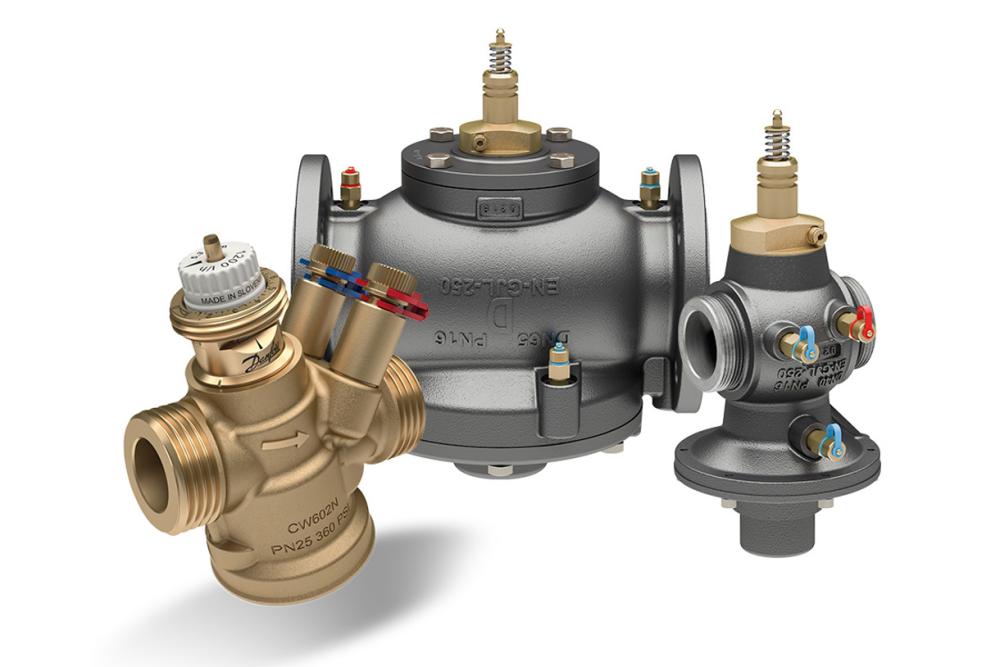
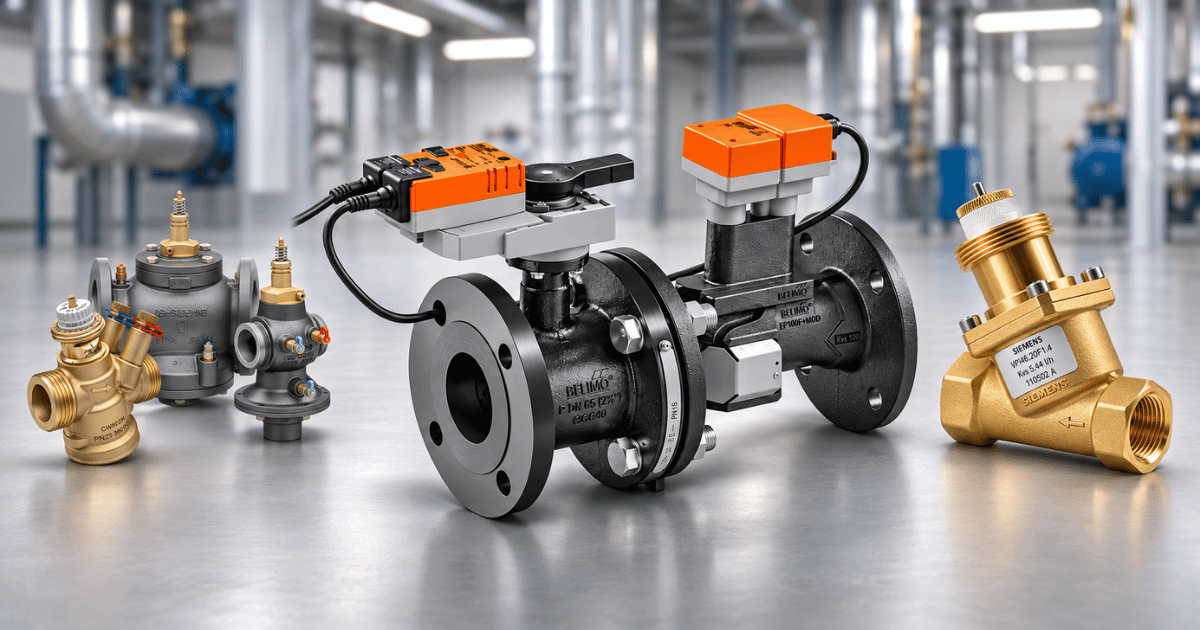
iACS stocks PICVs from three leading manufacturers, each suited to slightly different project requirements. The Danfoss AB-QM range offers permanent automatic balancing on terminal units such as fan coils, chillers, and heat exchangers, with screwed variants available from DN15 up to larger flanged sizes. The Siemens VPI46 series is a 2-way PICV available with pressure test points across DN15 to DN50, pairing with SAY..P actuators for HVAC and building control applications. Belimo's EPIV range extends to larger flanged sizes such as the EP150F and EP125F, with BACnet, Modbus, and MP-Bus communication options on select models for building management system integration.
Browse pressure independent control valves at iACS Store.
Comment(s)
Recent Posts
-
Pressure Independent Control Valves Explained: PICVs versus Traditional Valves
 November 4, 2026
-
How to Choose an HVAC Actuator: Torque, Voltage and Signal Type Explained
 November 3, 2026
-
CO2 Sensors Explained: Demand Controlled Ventilation for Better Air Quality
 November 2, 2026
-
Humidity Sensors Explained: Types and Applications in HVAC
 November 1, 2026
-
Immersion versus Strap On versus Duct Temperature Sensors: Which Should You Choose
 October 26, 2026