
What Our Customers Are Saying
Differential Pressure Switch Explained: Types, Settings and HVAC Uses
9
Sep
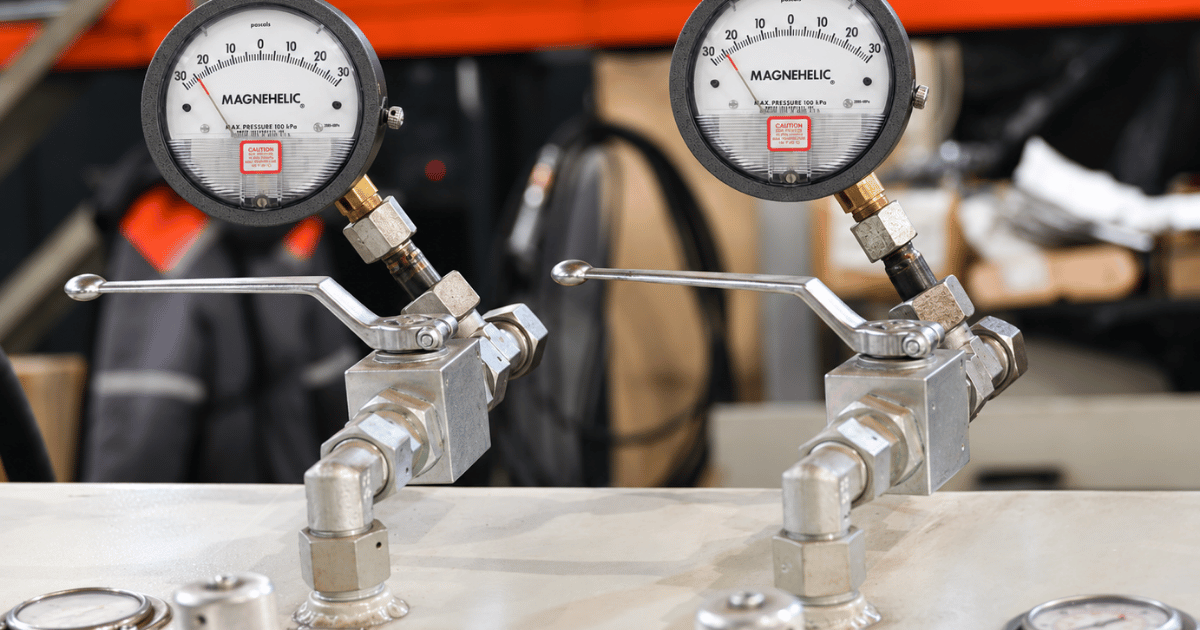
Table of Contents:
- What Is a Differential Pressure Switch
- How Does a Differential Pressure Switch Work
- Differential Pressure Switch Applications in HVAC
- Air versus Liquid Differential Pressure Switches
- How to Set the Differential Pressure Set Point
- Wiring a Differential Pressure Switch to a BMS
- Dwyer Differential Pressure Switches
- Frequently Asked Questions
- Featured Differential Pressure Switches at iACS
Differential pressure switches work on the principle of measuring the difference in pressure at two ends and then generating an electrical signal when this difference exceeds a certain limit. It is used in HVAC applications for detecting a clogged filter, for verifying that the fan is working, and for ensuring flow through a pump.
What Is a Differential Pressure Switch
A differential pressure switch has two pressure connections, taking a reading at each point and comparing the two. Once the difference between them crosses a set point the switch has been configured with, it changes state, sending a signal back to the BMS or a local alarm circuit.

How Does a Differential Pressure Switch Work
Inside the switch, a diaphragm or piston mechanism moves in response to the pressure difference across it. Once that movement reaches the adjustable set point, it trips an electrical contact, either normally open or normally closed depending on how the switch is wired into the wider system.
Differential Pressure Switch Applications in HVAC
Filter monitoring is the most common application, flagging a dirty filter alarm once pressure drop across a filter rises above the set threshold, as covered in our AHU filters guide. Fan proving confirms a fan is actually running by detecting the pressure it generates, giving the BMS a genuine feedback signal rather than assuming the fan started simply because it was commanded to. Duct pressure monitoring protects ductwork from over pressurisation. Pump proving works on the same principle as fan proving, confirming flow is present rather than assuming the pump is running correctly.

Air versus Liquid Differential Pressure Switches
Air differential pressure switches are used for filters, fans and ducts, measuring gas pressure. Liquid differential pressure switches are built for water or other fluids and are typically used on pumps and heat exchangers, where the internal diaphragm and seals need to be compatible with the fluid being measured.
How to Set the Differential Pressure Set Point
For filter monitoring, the set point is based on the difference between a clean filter's pressure drop and the manufacturer's stated dirty filter limit for that grade, with the alarm typically set somewhere between the two. For an AHU specifically, calculating the correct set point means factoring in the design airflow rate alongside the filter manufacturer's clean and dirty pressure drop figures for that specific model and grade.
Wiring a Differential Pressure Switch to a BMS
Most switches offer a simple normally open or normally closed contact, wired back to a digital input on the BMS controller, allowing the BMS to raise an alarm or trigger a control action the moment the switch changes state.
Dwyer Differential Pressure Switches
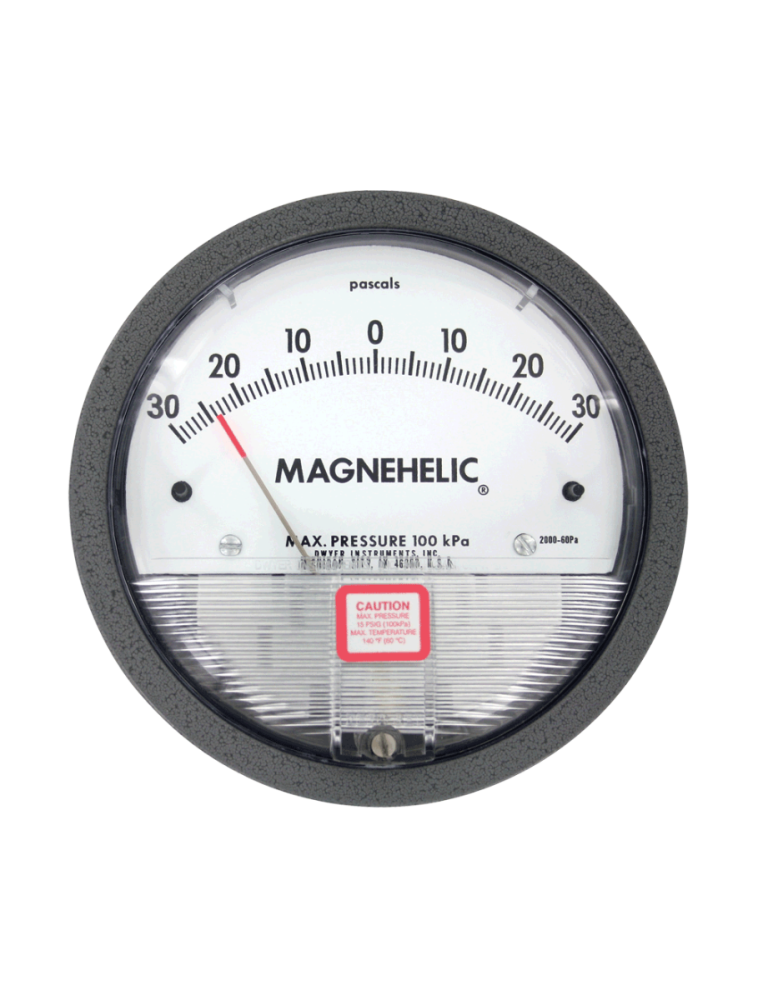
Dwyer is one of the most widely specified manufacturers of differential pressure switches in UK HVAC, with ranges covering air and liquid applications across a wide range of pressure and set point ranges, all available through iACS.
Frequently Asked Questions
What does a differential pressure switch do in HVAC?
It measures the pressure difference between two points and triggers an alarm or control signal once that difference crosses a set threshold, commonly used for filter monitoring, fan proving and pump proving.
How do I set a differential pressure switch?
The set point is calculated from the manufacturer's clean and dirty pressure drop figures for the specific application, such as a filter grade, and adjusted on the switch itself, usually via a screw or dial.
Differences between pressure switch and pressure sensor?
The pressure switch provides an on/off signal after the threshold value is exceeded, whereas the pressure sensor provides a variable output for its entire range of operation.
How does a filter differential pressure switch work?
It compares pressure on either side of the filter, and as the filter becomes dirtier the pressure drop across it increases, eventually crossing the switch's set point and triggering a dirty filter alarm.
Featured Differential Pressure Switches at iACS
The Dwyer Series 1620 1626-10 single and dual pressure switch covers a 2.0 to 11" w.c. range with diaphragm sealed construction, suiting general filter monitoring and fan proving duties. For low pressure applications such as clean room or duct monitoring, the Belimo 01APS-10R.1 differential pressure switch offers a 20 to 300 Pa range. Where a visual gauge and switch output are both needed on the same panel, the Dwyer 3000MRS-250PA Photohelic combines a 0 to 250 Pa gauge with a built in switch, useful where an engineer needs both a local reading and a BMS signal from one device.
Shop differential pressure switches from Dwyer and more at iACS Store.
Comment(s)
Recent Posts
-
EC Fans versus AC Fans Explained: Which Is Right for Your HVAC System
 October 17, 2026
 -
Steam Humidifier Explained: How HygroMatik Humidification Systems Work
 October 16, 2026
 -
Carel Controller Fault Codes Explained: A Troubleshooting Guide
 October 15, 2026
 -
Damper Actuator Not Working? How to Diagnose and Fix Common Faults
 October 2, 2026
 -
VAV Box Explained: How Variable Air Volume Systems Control Airflow
 October 1, 2026