
What Our Customers Are Saying
Spring Return versus Non Spring Return Actuators: Which Should You Choose?
16
Sep
What Is a Spring Return Actuator
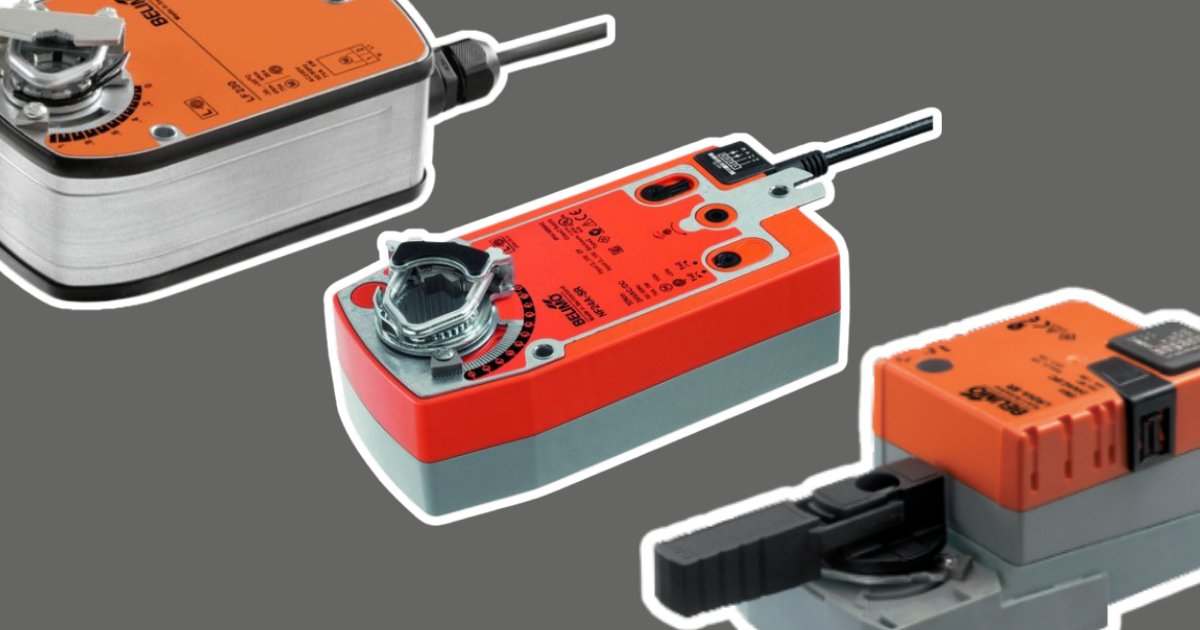
A spring return actuator uses an internal spring to drive the valve or damper actuator back to a default position, either fully open or fully closed depending on the application, the moment power is lost. This default position is known as the fail safe position, and it is chosen deliberately based on which state is safest if control is lost entirely.
What Is a Non Spring Return Actuator
A non spring return actuator simply holds its last commanded position if power is lost, with no built in mechanism to move it anywhere. This makes non spring return actuators generally cheaper, lighter, and able to deliver more torque for the same price point, since none of the actuator's capacity is used maintaining a spring mechanism.
When to Use Spring Return, Fail Safe
Fire dampers almost always require spring return actuators, closing automatically the moment power or a fire signal is lost, a requirement set out in fire safety codes rather than a matter of preference. Heating systems where a stuck open valve risks overheating a space benefit from a spring return actuator that fails closed. Cooling systems where a stuck closed valve risks freezing a coil benefit from a spring return actuator that fails open.
When to Use Non Spring Return
General HVAC zoning and non critical applications, where losing power simply means the valve or damper stays where it was until power returns, are well suited to non spring return actuators, since the extra cost of a fail safe actuator mechanism buys nothing of practical value.
Comparison Table
Spring Return |
Non-Spring Return |
| Fail-Safe Capability Yes |
Fail-Safe Capability No |
| Cost Higher |
Cost Lower |
| Torque per Pound Spent Lower |
Torque per Pound Spent Higher |
| Weight Heavier |
Weight Lighter |
| Best Use Case Safety-critical applications |
Best Use Case General zoning |
Modulating versus On and Off, an Extra Layer
Beyond the spring return decision, actuators also split into on and off control, opening or closing fully, and modulating control, typically using a 0 to 10 volt or similar signal to hold any position between fully open and fully closed. Modulating control gives finer temperature or airflow control at higher cost, and the choice here is largely independent of the spring return decision, meaning both spring return and non spring return actuators are available in modulating versions.
Belimo Actuator Range Guide
Belimo's actuator range covers both spring return and non spring return options across on and off and modulating control types, in a wide range of torque and voltage specifications, all available through iACS.
Frequently Asked Questions
What does spring return mean on an actuator?
It means the actuator uses an internal spring to drive the valve or damper to a default, fail safe position automatically if power is lost.
Is it necessary to have a spring return actuator for a fire damper?
Yes, spring return actuators are essential in fire dampers due to fire safety requirements that mandate the closing of the fire damper in case of loss of power.
What is fail safe position in HVAC?
Fail safe position is the state a valve actuator or damper moves to automatically if it loses power or control signal, chosen specifically to be the safest state for that application.
Featured Belimo Actuators
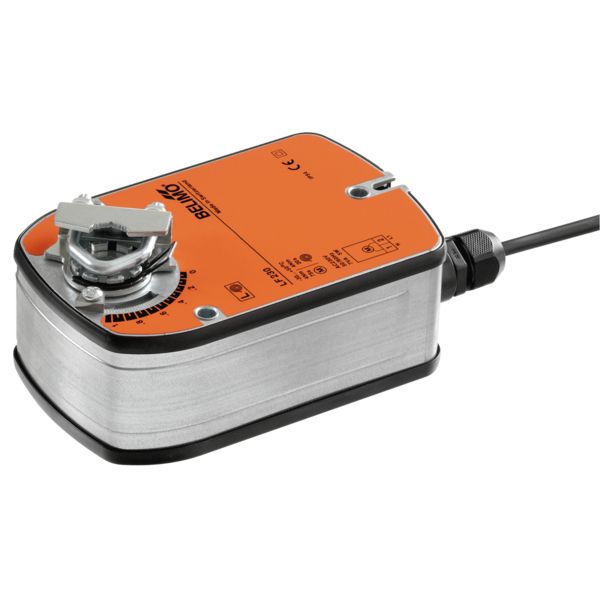
For fire and smoke damper applications requiring a guaranteed fail safe position, the Belimo LF230 is a 4Nm spring return actuator built for exactly this duty, closing automatically the moment power or a fire signal is lost.
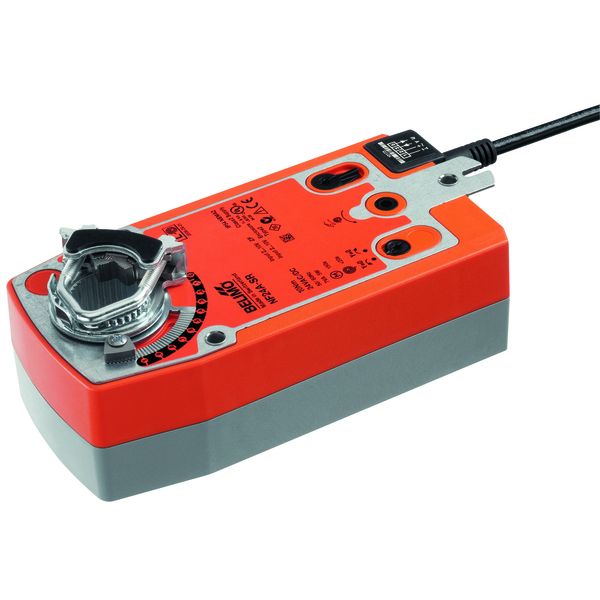
Where a valve needs both a fail safe position and finer control, the Belimo NF24A-SR combines 10Nm spring return with 0 to 10V modulating control, suited to heating and cooling coil valves where a stuck position could overheat or freeze a coil.
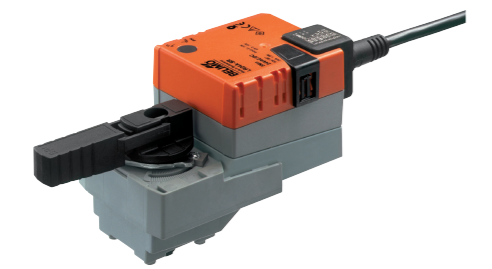
For general zoning where fail safe capability adds no practical value, the Belimo NR24A-SZ is a 10Nm non spring return modulating actuator, offering more torque for the same price point since no capacity is spent maintaining a spring mechanism.
Browse the full Belimo actuator range, spring return and non spring return, at iACS Store.
Comment(s)
Recent Posts
-
Boiler Sequencing Explained: How BMS Optimises Multiple Boiler Systems
 November 10, 2026
-
Air Flow Sensor Not Reading Correctly? Common VAV Faults and Fixes
 November 8, 2026
-
Pressure Independent Control Valves Explained: PICVs versus Traditional Valves
 November 4, 2026
-
How to Choose an HVAC Actuator: Torque, Voltage and Signal Type Explained
 November 3, 2026
-
CO2 Sensors Explained: Demand Controlled Ventilation for Better Air Quality
 November 2, 2026