
What Our Customers Are Saying
HVAC Controls Maintenance Checklist: What Engineers Should Inspect
27
Apr
Planned preventative maintenance (PPM) of HVAC controls is one of the most cost‑effective investments a facilities team can make. A control fault that goes undetected can run a system incorrectly for months — wasting energy, causing discomfort, and building towards a more expensive breakdown. This checklist covers everything that should be inspected, tested, and documented on a typical HVAC controls PPM visit, and it aligns with the wider control strategies outlined in The Complete Guide to HVAC Controls.
Before You Start: Documentation
- Retrieve the latest as-installed drawings and controller configuration files before attending the site.
- Check any outstanding alarms in the BMS or controller history log — these often indicate a long-running issue.
- Note the date of the last PPM visit and any previous faults recorded.
Sensors: Inspection and Calibration
- Inspect all visible sensors for physical damage, moisture ingress, or contamination — issues that can cause drift or intermittent faults. Accurate measurement is essential, and the principles in our HVAC Sensors and Measurement Guide reinforce why even small errors can cascade into major control problems
- Check that sensor cables are intact, correctly terminated, and not subject to mechanical stress.
- Verify sensor readings against a calibrated reference instrument — a temperature sensor reading 2°C high will cause the system to under-heat or over-cool throughout its range.
- Humidity sensors are particularly prone to drift. Replace any sensor that cannot be returned to within 3% RH of the reference by cleaning or adjustment. Browse Replacement Sensors.
- Check differential pressure sensor tubes and tappings for blockage or disconnection.
Actuators: Inspection and Function Test
- Actuators should be inspected for any signs of physical damage, overheating, or mechanical binding — issues that can lead to poor control authority or complete failure. The fundamentals of correct actuator operation are covered in our HVAC Actuators: The Complete Guide, and the same principles apply during routine PPM.
- Test full actuator stroke — command the actuator to 0% and 100% and verify it reaches both end positions. A valve actuator or damper actuator that cannot close fully will cause significant control problems.
- Listen for grinding or clicking from the actuator gearbox — this indicates mechanical wear.
- Check that the actuator coupling/linkage to the valve spindle or damper shaft is secure and correctly aligned.
- For spring-return actuators, test the spring return function by removing power and confirming the actuator returns to its fail-safe position. If any actuator fails these checks or shows signs of mechanical degradation, you can Browse Replacement Actuators suitable for HVAC applications.
Variable Speed Drives: Inspection and Check
- Check the drive display for any active or historical fault codes and log any faults found. The fundamentals of correct drive selection and operation are outlined in our Variable Speed Drive Selection Guide, and the same principles apply during routine maintenance.
- Verify drive is operating at the correct speed/frequency for current system conditions.
- Clean ventilation slots and internal heatsink (where accessible without compromising IP rating).
- Check input and output cable terminations for signs of overheating, discolouration, or looseness.
- Verify the communication link to the BMS or controller — confirm that the speed reference and status feedback are reading correctly.
Controllers: Inspection and Verification
- Check the controller graphic display for active alarms or fault codes.
- Verify all analogue input readings are plausible — cross-reference against sensor readings noted above.
- Test all digital input states — confirm on/off status matches physical equipment state.
- Test all output signals — verify correct response of field devices to manual output commands.
- Check pCO controller firmware version — note whether a newer version is available and whether an update is recommended.
- Verify BACnet or Modbus communication — confirm all points visible at BMS level are reading correctly.
Communication System
- Check RS-485 bus wiring for correct termination resistors at both ends of each bus segment.
- Verify all device addresses are unique and documented. Use a USB to RS-485 converter for direct diagnostic access.
- Check for any communication errors or timeouts in the BMS event log.
- Test remote access functionality — confirm web access or remote desktop connection is working.
After the Visit: Documentation
- Update the site PPM record with all findings, readings, and any replacements made.
- Raise a corrective maintenance request for any faults that could not be resolved on the visit.
- Update sensor calibration records.
- Photograph any physical defects found.
iACS supplies replacement sensors, actuators, controllers, and drives for HVAC PPM — with same‑day dispatch on thousands of lines — and you can browse all HVAC controls products if a component needs replacing. For a wider context on how these systems fit into the overall control architecture, return to The Complete Guide to HVAC Controls.
Comment(s)
Recent Posts
-
Steam Humidifier Explained: How HygroMatik Humidification Systems Work
 October 16, 2026
 -
Carel Controller Fault Codes Explained: A Troubleshooting Guide
 October 15, 2026
 -
Damper Actuator Not Working? How to Diagnose and Fix Common Faults
 October 2, 2026
 -
VAV Box Explained: How Variable Air Volume Systems Control Airflow
 October 1, 2026
 -
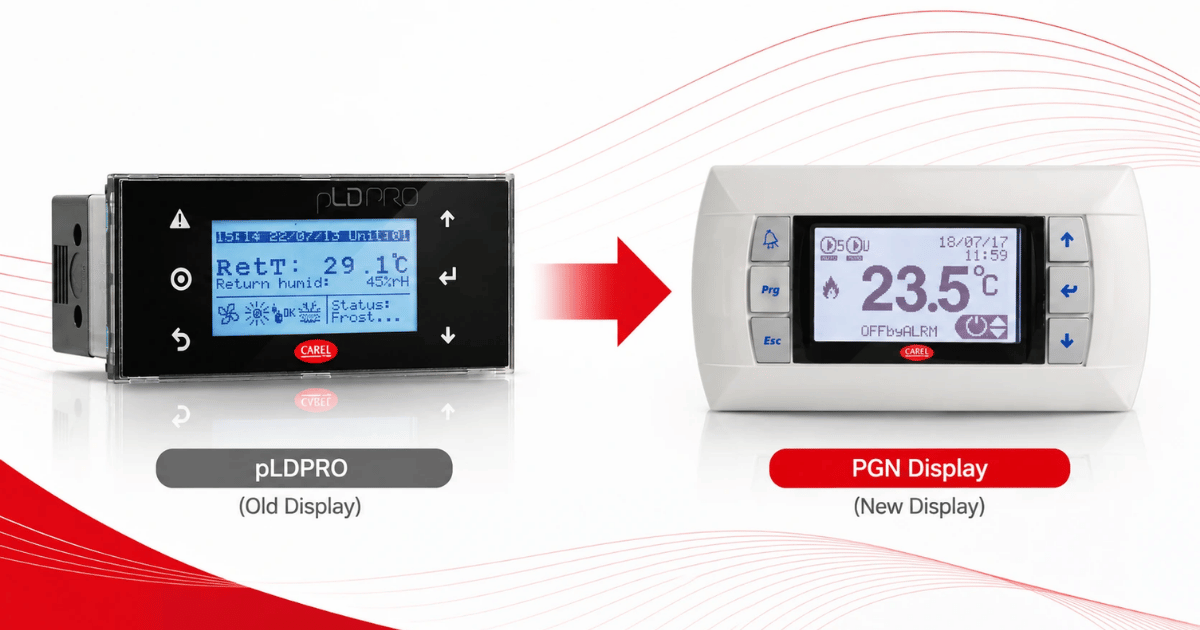
Replacing a CAREL pLDPRO Display: pGDn Options, Fit Checks and Affected Part Numbers
 September 23, 2026